[ad_1]
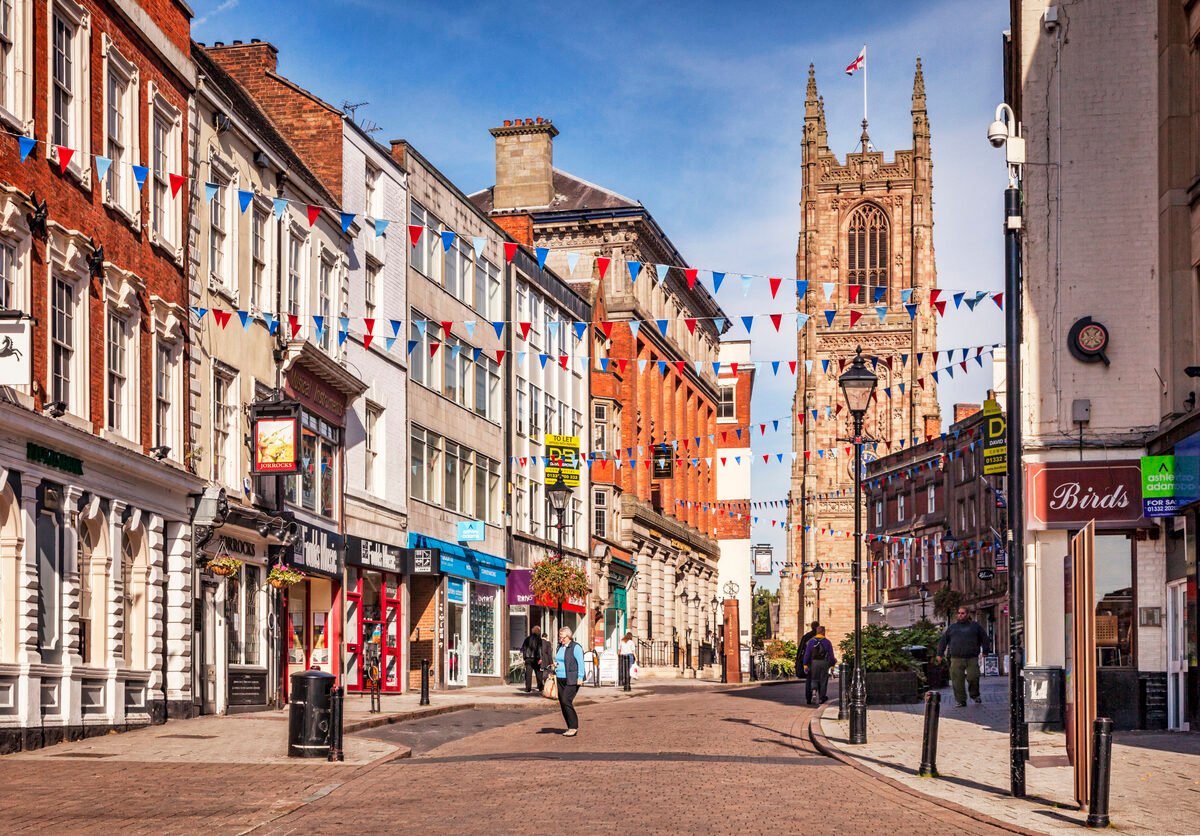
Derby’s housing market is characterised by its affordability, its ongoing regeneration and rising demand in both the sales and rental sectors.
The city has a population of more than 270,000 and is perhaps best known for its advanced manufacturing, rail and engineering sectors, with its major employers and long-term investment ensuring it has a strong and stable economic foundation.
According to Office for National Statistics (ONS) data, the average property price in Derby is between £205,000 and £206,000. Detached homes average £310,000–£315,000, semi-detached properties are around £205,000–£210,000, terraced homes are around £165,000, and flats are £110,000.
Annual price growth in Derby is currently running at 2–3%, which is comfortably ahead of London, where growth is between 0–1%. With average values less than half those of London (£520,000), its lower entry point provides investors access to its market with considerably less upfront capital, while also delivering healthy yields.
Average monthly rents are approximately £840–£845 and are currently increasing by 3–4% year on year. One-bedroom properties typically achieve around £590–£600 per month, while larger homes can command higher rents depending on their size and location.
Highly accessible purchase prices
Combined with comparatively low purchase prices, this supports yields of around 4–6%.
A strong employment market underpins local demand in both the sales and rental sectors. Derby has a well-established industrial base, which includes employers such as Rolls-Royce, Toyota and Alstom. The growth of these sectors, alongside wider supply-chain activity, means there is a large and increasing pool of skilled workers. The city is also home to Infinity Park Derby, a major advanced manufacturing and logistics site that has attracted considerable investment and created a wealth of new job opportunities.
Derby’s appeal has also been enhanced by several large-scale regeneration programmes. The Becketwell scheme, a £200m mixed-use redevelopment in the city centre, is transforming a previously underutilised area into a new urban quarter. It includes build-to-rent housing, commercial space and a 3,500-capacity performance venue, which is expected to attract around 250,000 additional visitors each year and generate more than £10m annually for the local economy, while supporting over 200 jobs.
Another scheme, Castleward Urban Village, located between the city centre and railway station, is expected to deliver more than 800 new homes alongside more public spaces, retail and community infrastructure.
Ongoing plans
Together, these developments are reshaping the city centre and its surrounding areas, improving liveability and increasing the supply of modern housing in well-connected locations. And, moving forward, Derby’s regeneration programme is set to continue delivering new sites across the city.
It also benefits from its central Midlands location, with direct rail links to major cities including London – around 90 minutes by train – Birmingham and Sheffield. This connectivity means it is a popular commuter location, particularly for those seeking more affordable housing within reach of larger employment hubs.
Higher education adds yet another layer of demand. The University of Derby has a student population of around 34,000 and maintains strong links to local industry, helping to retain graduates and ensuring a steady supply of highly qualified workers.
The combination of lower entry prices, industrial strength and ongoing regeneration has resulted in Derby becoming an increasingly attractive opportunity for buy-to-let investment.
[ad_2]
Source link