[ad_1]
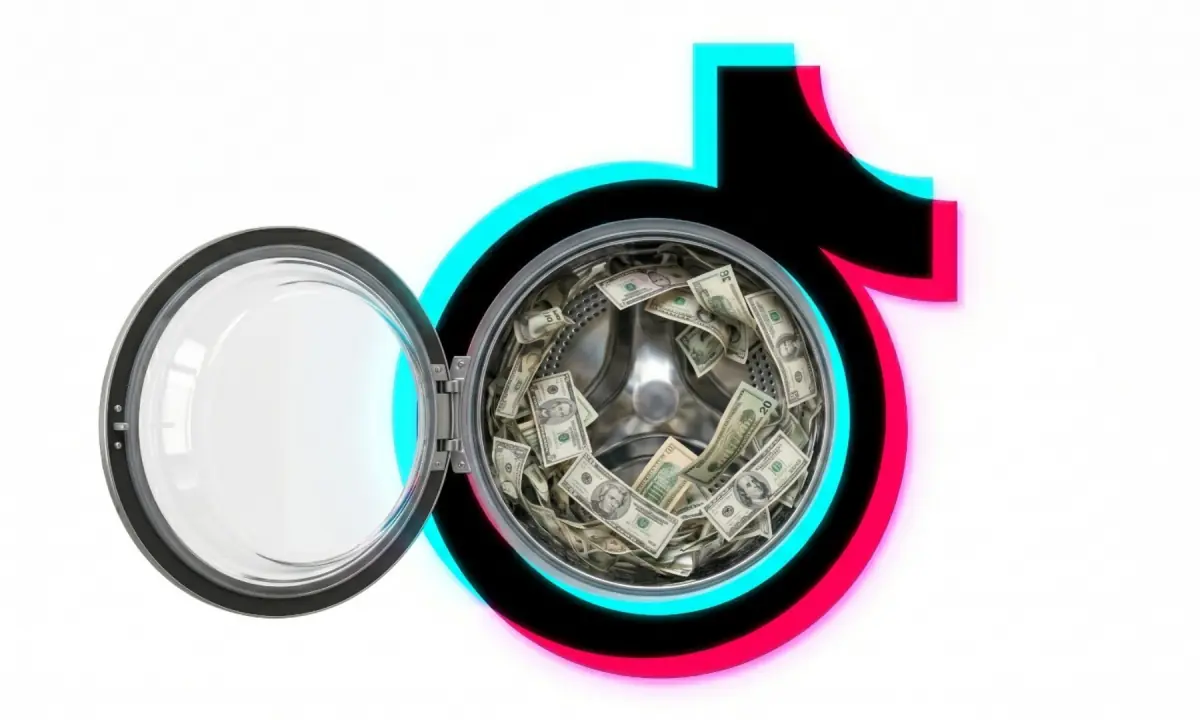
A report has warned that TikTok’s live gifting system can be used to move funds through digital channels outside conventional financial oversight. It says Pakistan’s anti-money laundering framework is not fully equipped to track such micro-transactions.
ISLAMABAD: TikTok’s live gifting and virtual payment system has emerged as a potential channel for moving funds beyond the reach of traditional financial oversight, according to a report that examined how digital platform features can be exploited for money laundering and other illicit financing, according to a report by Dawn.
The report said users on TikTok and similar platforms can buy virtual currency through debit cards, mobile wallets or bank accounts and then send gifts to creators during livestreams or other interactions. After the platform deducts its commission, the remaining amount is credited to the creator’s internal wallet and can later be withdrawn through payment processors, digital wallets or linked bank accounts in local currency.
It said a transaction that begins as an online gift can pass through several stages — including virtual tokens, platform wallets, intermediaries and cross-border processors — before appearing as legitimate money in a bank account. The report described this as a shadow financial route embedded in entertainment platforms.
Global scrutiny of TikTok’s payment features
According to the report, unsealed court documents in 2025 linked to a consumer protection lawsuit by Utah’s Division of Consumer Protection disclosed details of Project Jupiter, a 2021 internal TikTok investigation. The documents indicated that the company had suspected organised crime groups were using its live gifting feature for money laundering. The report said the internal review identified a high risk of money laundering, but alleged that TikTok did not act on it.
The report further said financial authorities in Turkiye opened an investigation after $82 million moved through TikTok accounts in transactions that raised concerns about terrorism financing. It added that regulators in Australia and the United Kingdom have also begun examining whether TikTok’s token-based system amounts to an unlicensed shadow banking service.
The Financial Action Task Force has also raised concerns over digitally enabled crowdfunding, saying such systems can be exploited for terror financing, the report said. It added that the FATF has repeatedly warned that new payment technologies are being used for money laundering and terrorism financing, while the United Nations Counter-Terrorism Committee Executive Directorate has highlighted the role of online platforms in enabling cross-border fundraising with limited traceability.
The report said investigations in multiple countries have identified coordinated fraudulent donation networks operating through social media accounts, while academic research has documented hundreds of such schemes. It added that extremist networks have used micro-donations at scale because the pattern can evade conventional detection methods.
Pakistan’s digital economy and regulatory gap
The report said Pakistan illustrates the tension between rapid digital adoption and limited regulatory oversight. It referred to a 2025 investigation by The Observer that found vulnerable children in Pakistan, Indonesia, Afghanistan, Syria, Egypt and Kenya were being placed on livestreams to solicit virtual gifts from viewers around the world, with organised handlers allegedly controlling the proceeds behind the scenes.
It also cited the 2022 case involving social media personality Hareem Shah, who posted a video showing stacks of British pounds and claimed she had transported the cash from Pakistan to the United Kingdom. While the Sindh High Court restrained the Federal Investigation Agency from taking action, the report said the episode highlighted the difficulty authorities face when income generated through platform gifts and brand deals lacks a verifiable paper trail.
By the end of 2025, Pakistan had nearly 80 million social media users, according to the report. It added that the State Bank of Pakistan reported digital channels accounted for 88 per cent of the country’s 9.1 billion retail transactions, with a total value of about Rs612 trillion.
How micro-transactions can avoid detection
The report said Pakistan’s anti-money laundering framework, including the Anti-Money Laundering Act 2010, was designed for an earlier era of financial crime focused on larger and more structured transactions moving through conventional banking channels. As a result, it said, the system is less equipped to detect thousands of small digital transfers from coordinated anonymous accounts into a single platform wallet.
To illustrate the risk, the report presented a hypothetical example of a mid-level influencer receiving repeated gifts of Rs500, Rs1,000 and Rs2,000 from multiple accounts over a month, eventually accumulating Rs2 million. It said such individually small transactions may not trigger alerts even when they collectively represent a significant sum.
The report argued that the core issue is that social media platforms are not classified as financial institutions even though they perform financial functions by moving money, converting value and facilitating cross-border transfers. It identified three resulting blind spots: the absence of mandatory customer due diligence for monetised accounts, the lack of structured suspicious transaction reporting, and no integration with financial intelligence units.
It said Pakistan has built an anti-money laundering infrastructure through the State Bank of Pakistan and the Financial Monitoring Unit, largely under FATF pressure, but that framework remains focused on the conventional financial sector and does not cover the digital gifting economy.
The report added that China has already required livestreaming platforms to implement strict real-name verification and transaction monitoring, placing greater responsibility on the platforms. It said other jurisdictions are moving in a similar direction, while in Pakistan the regulatory debate is still at an early stage.
[ad_2]
Source link