
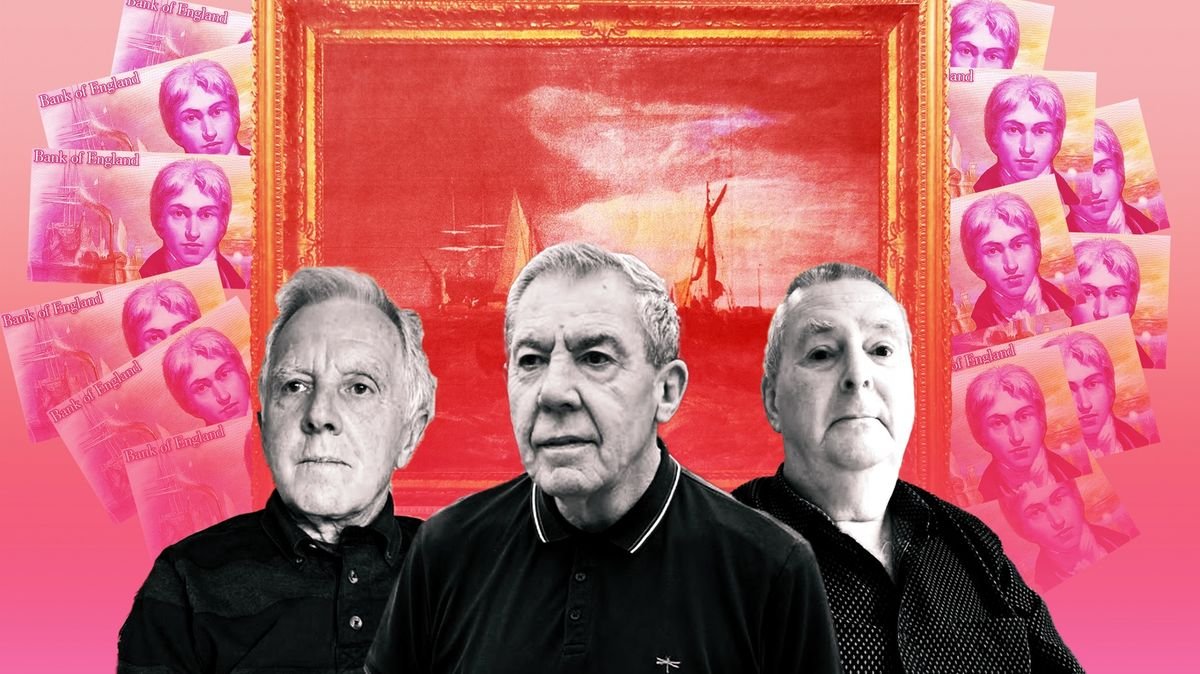
Special investigation: Three men claim they were promised grand returns on art deals pitched by their neighbour and friend that never materialised. The police said there was no case to answer

15:50, 05 Feb 2026Updated 16:02, 05 Feb 2026

Three men have told the ECHO how they invested thousands of pounds into proposed art sales by their friend and neighbour. They all lost nearly all of their money.
It was a bright and pleasant day in the early summer of 2019 and John Balcomb was tending to his back garden.
John and his wife Maureen had recently held an outdoor gathering for friends and family at their home and John was proud of how resplendent he had made the garden look for the occasion. So he says he wasn’t especially surprised when his neighbour from four doors down, Michael Grimes, came and asked for some tips.
“Michael was walking past and said he wanted some advice on how to get some more colour into his garden,” explains John. “We had put a lot of effort into making the garden look nice, so it made sense and I said I would pop by for a coffee at some point to give him some advice.”
John had lived a few doors down from Michael Grimes for more than ten years in Timms Lane, a sleepy street of grand homes and luxurious bungalows in the Formby area of Sefton, Merseyside.
John, now 80 years old, says he had no inclination that a simple request for some horticultural guidance from a neighbour would be the start of a curious tale of a painting said to be worth millions of pounds and an investment that turned his comfortable life upside down.
“I popped over to see Michael one morning at his house,” John recalls from inside his homely living room in Timms Lane – his still well-maintained lawn visible through the wide window.
He says he knew his neighbour was an art dealer and had been in business buying and selling paintings for some years. The inside of Michael’s plush Formby home appeared to be further evidence of his successful life, with impressive paintings hanging on every wall of the large property.
“We were talking about the garden when Michael turned the conversation to his work,” says John. “He asked if I was interested in art, I said not really, but he dashed off to get his portfolio and said he wanted to show me some of the stuff he was dealing with.”
According to John, Michael returned with a thick booklet of pictures of various paintings that he began leafing through, before suddenly stopping on one particular page which featured an image of a man standing next to a desk in a large room. John immediately recognised the man in the picture.
The Fighting Temeraire
“It was Mark Carney, who was at the time the Governor of the Bank of England,” he remembers. “Behind him was this big painting on the wall.” Michael informed John that the painting in question was an original by J.M.W. Turner, perhaps the greatest English romantic artist, and that he had been commissioned to deal with its sale.
The painting in question, John believes, was Turner’s famous oil painting from 1838 The Fighting Temeraire, and the reason Mr Carney, now the Canadian Prime Minister, was pictured next to it was that it had been announced that the artwork would feature on the nation’s new £20 notes.
“Michael told me that this painting was worth millions,” says John, “he was saying, ‘John you are such a nice guy, I would love to do something for you.”
John claims his neighbour explained to him that if he were to invest some money into the dealing of the painting, he would make a very good return from it.
“He told me that if I put £20,000 into the sale and it went ahead, I would make a 30% return.” John says he quickly worked out that would potentially pull in a very handy £6,000 at a time when rock-bottom interest rates were doing absolutely nothing for his and Maureen’s savings.
He says Michael told him the money was needed up front in order for the sale to proceed as it would pay for transportation, authentication and other administrative matters, but that he (John) would then receive a large return on his money.
The ECHO has spoken with the Society of London Art dealers for expert independent advice. They told us that asking for cash up front in this manner is not standard practice in the industry.
Explaining his thinking at the time, John adds: “When I was sitting there having a coffee with Michael, he was talking about all the connections he had in the art world. He said he specialised in Lowry works and pointed to what he said was an original Lowry sketch hanging on the wall behind me.
“Michael appeared to be very successful and wealthy, he had three BMWs on the drive and a big, million-pound house, so the image all fitted. It just stacked up. He was a neighbour we had known for years, so it looked like a safe bet.”
He adds: “So I came home and spoke to Maureen, my wife. I said ‘what do you think?’ We felt we had money in an ISA that was doing nothing. So we went with it. We went with the £20,000.”
In his present-day living room, John, a former baker, reaches into his folder of meticulously maintained documents and produces a letter, headed with the logo for a company called MG Fine Art.
The letter, which is signed by Michael Grimes and is addressed to John Balcomb, sets out the terms of the deal to which John says he had agreed.
A statement released to the ECHO on behalf of Mr Grimes and his family says that Mr Grimes suffers from advanced dementia and Alzheimer’s disease and has suffered from these illnesses, which affect behaviours, for many years. The statement says Mr Grimes now lacks mental capacity to provide any response.
The letter John showed to the ECHO states: “Dear John, this is to confirm the receipt of the sum of £20,000 received from you on July 3, 2019.
“As you agreed, this was for the purpose of your contribution towards the potential sale of a rare Turner oil painting which is in London. As we presented and discussed in depth the process we needed to follow.
“We already had an offer from an American buyer and still await the buyer to visit London to view the painting.
“We have set in place other potential buyers and also have other important paintings ready to offer buyers eg Titian, Monet and many others.
“The agreement was that in the event of a sale, we will refund your £20,000 plus the 30% commission. In the event of a no sale you will still be refunded your £20,000.”
“Best wishes, Michael.”
The letter is dated 18/08/2019 and bears the signature of a Michael Grimes. The ECHO was also shown a copy of a cheque from John Balcomb to Mr M Grimes for the sum of £20,000 which was dated July 7 2019.
At first relations between the neighbours remained cordial, John recalls, adding that he was invited to a family barbeque at the Grimes’ house shortly after the deal had been agreed. But he says that as time moved on, he became agitated at the lack of news regarding his investment.
“The months rolled on and we heard very little about the sale and the next year of course Covid arrived,” explains the 80-year-old.
He says Michael would initially ring him perhaps once a month to provide some form of update.
“He would often say there had been delays to the sale of the painting because of the pandemic – but that everything was ok. On one occasion he brought a bottle of wine and I felt reassured that things were on track.”
But as he looks back on that time with anguish, John says communication became harder and more scarce. And as 2019 became 2020 and then turned into 2021 his patience was wearing thin. On his account, it was two full years after the initial transaction that he decided to ask for his money to be returned.
“As we were coming out of Covid in 2021, I told my wife that as it had been basically two years since we transferred the money to Michael, I was going to ask for it back,” John recounts.
Present-day John produces another letter at this point (he has kept copies of everything). The letter, dated September 2 2021, states:
“Dear Michael, it has been two years now since our arrangement regarding the sale of the Turner oil painting. At the time, you had an offer from an American buyer and other potential buyers. As this has not materialised, I would like to withdraw and have my £20,000 refunded by the end of September.”
It was around this time that John says a chance meeting with another neighbour made his blood run cold.
“I was standing out in the front garden one day when my neighbour Les Ellis – who lived directly next door to Michael – passed by and stopped for a chat on his way home,” recalls John.
“We were talking generally about football and other things when I just said to Les, have you seen anything of Michael Grimes?”
“I remember Les stood back sharply and asked why I was asking. He looked at me and just said ‘he hasn’t asked you to invest in a painting has he?’ My stomach just dropped.”
A chance conversation & growing unease
Les Ellis remembers that same moment like it was yesterday.
He says: “I think when I found out John had invested like me and didn’t know what had happened to his money either – it was confirmation of the worries I had been having for some time,” he explains.
Speaking from John’s Formby living room, Les, also now 80, explains how he ended up handing over £35,000 to Michael Grimes for the sale of what he believes to be the same Turner painting around a year before John handed over his £20,000.
“I lived next door to Michael for the best part of 20 years. I didn’t socialise with him but he was always pleasant enough to say hello to,” explains Les.
“I was a surveyor so I did a few jobs for him and a few favours, but that was the extent of our relationship really.”
As well as his surveying work, Les was – and is – the chair of a charity called The Docklands Trail, which hosts a heritage centre within specially customised shipping containers at Liverpool’s northern docks, detailing how the city supported Britain’s industrial revolution.
In 2018, the charity was just getting going and Les and others had organised a fundraiser at Formby Cricket Club, where he had been a member for 40 years.
“The week after the fundraiser, I got a call from Michael”, says Les. “He said he had been told about the charity and he thought he could help us.
“He said if we wanted to put some money into the sale of a Turner painting, he could guarantee we would get our money back and probably up to a 50% return.”
“The charity had just got going and we had big plans, so a bit of extra cash would have been helpful to expedite things,” adds Les, who went home to consider what he should do.
Like John, there were no thoughts that this was a deal that could go badly for Les. “Michael had lived next door to me for 20 years, he states. “I didn’t even ask him for a receipt.”
Les decided to invest £35,000 into the sale of the Turner painting. He did this through an initial cheque of £5,000, followed by the remaining £30,000 a week later. The payments were made in July and August of 2018.
Much like John, Les then watched the months move on.
“I would occasionally ask him how the sale was going over a period of time and he would come back saying ‘we’re just getting into the nitty gritty of it’ and things like that,” Les recalls.
He didn’t want to believe that something had gone wrong and claims he received repeated assurances from Michael Grimes that all was well, it was just taking time.
But he says it was the conversation with John in the Autumn of 2021 that turned his growing concerns into cold, hard fear.
“When I bumped into John that day, he suddenly asked me if I had heard from Michael. I think he asked if I had any dealings with him. I told him about the deal I had agreed to and he told me about his. We both realised something was wrong.
“It was probably the first time those feelings I had been having felt like they were confirmed really,” says Les, with a pained expression etched across his face.
Shortly after this, Les recalls that he went around to his neighbour’s house, demanding to know where his money was. “We are getting down to it now, we won’t be long” is the response he recalls.
But Les and John had waited long enough by this point and decided to instruct a solicitor to pursue the money they had lost.
The ECHO has seen large amounts of correspondence between Les, John and the solicitors’ firm and have viewed a letter from those same solicitors to Michael Grimes, warning that court proceedings will begin if the money is not paid back.
This action got as far as copy claim forms being issued for the return of the money, which the firm warned, would be filed with the court if the full repayment was not made.
Les and John were also advised by their solicitor to speak to the police and they say they had several interviews with the Fraud Squad from Merseyside Police.
Merseyside Police have since told the ECHO that having looked into the case, there was no evidence of dishonesty or falsehood in order to take it forward as a criminal matter and that there was no evidence that this was anything other than an investment opportunity that failed.
A force spokesperson said: “Following a review of this matter, it was found that no crime was committed and the parties involved were advised to continue a civil claim.”
What complicated matters was that Les and John had by this stage learned that Michael Grimes had developed dementia and Alzheimer’s disease. Legal correspondence seen by the ECHO confirms these diagnoses and reveals that a moratorium had been applied for on his behalf, which would seek to halt any enforcement action against him, including court action.
As the summer of 2022 arrived, Les and John were informed that what is known as an Individual Voluntary arrangement process was underway for Mr Grimes and that this may be their best chance of getting some of their money back.
An IVA is a legally binding agreement between an individual and their creditors to pay back a portion or all of their unsecured debts through affordable, regular payments, managed by an insolvency practitioner.
“Our solicitors sent letter after letter and nothing was happening and it was costing us an arm and a leg,” says John. “That’s when we heard about the IVA process and were told this might be the best chance of getting some money back.”
It was through this process that John and Les say they met many more individuals who had also reportedly invested in art sales with Michael Grimes and who, like them, had never seen a penny returned.
One of those people was Ian Cullingworth, a 75-year-old from Wirral who ran a courier company before his retirement.
It was through this company that he met Michael Grimes.
“I first came into contact with Michael in 2013 and I knew his brother, who told me Michael was looking to pick up some paintings from London. I did that and it was the start of a relationship in which I ended up doing a great deal of work for him.”
Like all businesses, Ian’s firm had its ups and downs and he says Michael Grimes would help him out with extra jobs when he really needed them. “He knew when I was on my uppers and would give me work. He was one of my best clients and I met other art dealers and got work from them as well,” he adds.
After his retirement in 2018, Ian kept in touch with his friend Michael Grimes and would pop round to Timms Lane for a catch up now and then.
On one of these occasions, he says Michael got out a portfolio with a different Turner painting on show.
Purfleet and the Essex Shore
In this case, the Turner being displayed, Ian recalls, was Purfleet and the Essex Shore as seen from Long Reach. It was bought from Turner’s gallery in 1808 by George Capel-Coningsby, the 5th Earl of Essex before travelling on a journey that would take in Philadelphia and New Jersey and back to London again.
Described at the time of its creation as “one of the finest sea-pieces ever painted”, the picture was one of only two of the artist’s remarkably early seascapes to remain in private hands. A listing at Sotherby’s would value the painting at between four and six million pounds.
“He gave me this write-up about the painting from some gallery down south,” explains Ian.
“He told me all about the painting and asked if I would be interested in investing.”
Ian, like John and Les, says he was told that the cash was needed to progress the sale of the painting and prove its provenance amongst other things – but that his initial investment would be handsomely rewarded after it had sold.
He recalls: “He actually asked me for £35,000 but when I went home and spoke to my wife, we decided that we would invest £20,000, which we took out of our savings ISA.”
After the payment was transferred in December 2018, a similar pattern emerged, according to Ian. He says he would continually ask for information and updates (he has a note of all the times he called looking for answers) but was told that there had been delays, with pandemic given as a major reason for further issues with the sale.
“It was really starting to annoy me,” explains Ian. “When things were opening up after the pandemic, I went round to his house to ask where my money was. He opened up his portfolio again and asked if I wanted to invest another £10,000 in a Monet painting.”
“I just looked at him and said, I don’t think so Michael.”
At this point, Ian says he had no idea that others were in the same boat as him, but he met Les and John as the IVA process began, organised by an insolvency practitioners. The process began in 2022 and was only concluded in September 2024.
Ian recalls: “I didn’t find out there were others affected until the IVA meeting, suddenly I was given this sheet with all these people on it and I met these guys (gesturing to Les and John) and I was just amazed. I had initially presumed it was just me.”
A creditor claims summary report for Michael Grimes, produced by the insolvency firm – and seen by the ECHO – details the individual names of John Balcomb, Ian Cullingworth and Les Ellis, with the respective figures of £20,000, £20,000 and £35,000 that they handed over to Michael Grimes. They are far from the only creditors on the list. The report lists more than ten individual creditors and multiple companies, with varying amounts being claimed.
What the three men each received at the end of what they describe as a lengthy and frustrating process was just a fraction of the cash they invested.
“I ended up getting £1900 back through the IVA process,” reveals John. “It was put to us that it would be to our financial advantage to go for IVA, rather than going for bankruptcy. I think now we would have preferred to go for bankruptcy, because it would have been over more quickly – this whole process took 2.5 years.”
The men have serious frustrations with the IVA process John adds: “We felt like we were at the bottom of the list, because all the financial institutions came first.”
Ian received the same amount, which he describes as “derisory.” He adds: “The feelings of frustration and anger remain. None of the systems have worked right for us.”
Les received a little more cash back – just over £3,000 – because of the higher level of investment that he made, but still just a sliver of what he handed over. He becomes emotional when talking about what the money could have meant for his daughter.
“£35,000 is an awful lot of money, there is an awful lot of hard work involved in that,” he says.
“Selfishly I try not to think about it too much. But I don’t think it’s my loss, it is my daughter’s loss. The charity is something that never had it, so it will never miss it. But for my family, that’s the hardest bit.”
For Ian, there is continued frustration and anger. “That money would have helped us of course, we could have had a couple of holidays. It’s very irritating.
“Hindsight is a wonderful thing.
“You go through spells with it,” adds John. “Knowing we were talking to you (The ECHO) today meant I could not sleep last night thinking about it all.
“What are the main emotions? I’m just mad with myself for getting dragged into something like this.
“I think about what I could have done with the money. I was a baker so I never had lots of money. I worked for 50-odd years from 4am until late afternoon. Money never came easy, so £20,000 is a lot.
“My family all say I am naïve”, he adds with a sad smile. “I have never really had anything bad happen to me thank goodness, until this. At times it just gets you so mad.”
A statement released to the ECHO on behalf of Mr Grimes and his family said: “Sadly, Mr Grimes suffers from advanced dementia and Alzheimer’s disease. He has suffered from these illnesses, which affect behaviours, for many years. He now lacks mental capacity to provide any response.”