
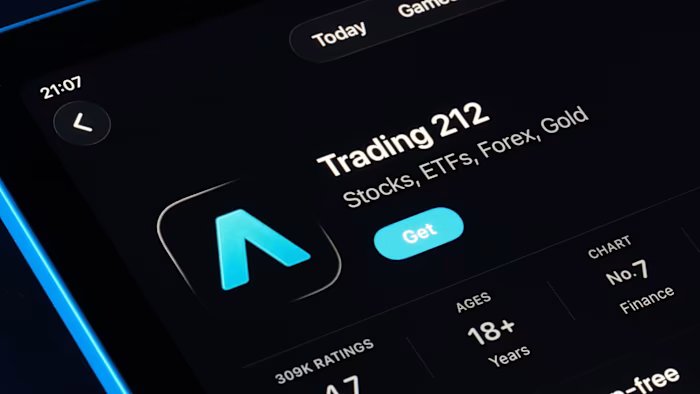
Trading 212, one of Europe’s largest investment platforms, sold cryptocurrency-linked products to UK retail investors without permission from the financial watchdog.
Traders in the UK have been able to purchase crypto exchange traded notes (ETNs) since last October, when the Financial Conduct Authority overturned a ban it put in place in 2021. ETNs track the value of crypto assets and are designated as debentures, a form of debt security.
Trading 212 did not have FCA authorisation to sell these to retail buyers until Monday, according to the company’s entry on the watchdog’s financial services register.
The company only applied for authorisation last week after being contacted by its supervisors at the FCA, according to a person briefed on the situation.
Interactive Investor, Fidelity and Freetrade also offer crypto ETNs on their platforms to their retail customers, but have had specific permission to sell debentures on the FCA register since October.
“If you are already an authorised firm and you don’t have permission to provide a certain product that is a breach of FCA rules, but it is much less serious than if you were not a regulated entity at all, which would be a criminal offence,” said Diego Ballon Ossio, a partner at law firm Clifford Chance, which specialises in fintech regulation.
He said the FCA would usually require regulated companies to remedy the situation and, where appropriate, to stop providing the unauthorised product until they had the necessary permission. But the watchdog could also take enforcement action to impose fines and potentially even require a company to repay profits or compensate customers who suffered losses.
The FCA may also seek to rely on non-statutory powers or “moral suasion” to, in effect, compel firms to agree to “voluntary redress schemes”, either with or without the appointment of a “skilled person” review by a third-party expert, Ossio said. The FCA declined to comment.
In a now deleted website post, Trading 212 said two weeks ago that it had “briefly paused” the availability of complex instruments, including crypto ETNs, for new customers to upgrade its “internal systems and onboarding flows”.
Crypto ETNs were still advertised on the platform during this time but at the review order stage a prompt appeared that stated “we’re making improvements”. It then added: “We expect to be back online soon — thank you for your patience!”
As of Monday, the FCA register for Trading 212 has been updated to include the ability to sell such debentures and no such prompt appears when traders try to make a purchase.
Co-founded by Bulgarians Ivan Ashminov and Borislav Nedialkov in 2004, Trading 212 received its FCA licence in 2014. It has disrupted the market with its offer of zero-commission trading and aggressive marketing.
It froze onboarding of new clients in 2021 for more than a year as it grew rapidly and has since gained a large number of customers through the tax-free cash Isa savings product it launched in 2024.
The FCA has taken a cautious approach to regulation of cryptocurrencies, only lifting its 2021 ban on the sale of crypto ETNs to retail consumers in October, following political and industry pressure to loosen regulations.
When it lifted the ban, sparking a price war between issuers, the regulator said the market had “evolved, and products have become more mainstream and better understood”. The price of bitcoin surged in the first half of last year, but it is down more than 20 per cent since October.
The FCA said in a statement on October 27: “Crypto ETNs are complex products, and firms should ensure they have the correct permissions to offer them to consumers.”
Most crypto ETNs are physically backed and track the price of a cryptocurrency, such as bitcoin which is held by a custodian. But unlike exchange traded funds — which have boomed in popularity in the US — investors hold a debt note linked to the price of the asset, not a stake in a fund that owns it.
Although not covered by the Financial Services Compensation Scheme, crypto ETNs are highly regulated as “restricted mass market instruments”.
Trading sites cannot offer investment incentives, are required to provide warnings about products, offer a 24-hour cooling off period and make sure investors declare they will not put more than 10 per cent of their net assets in high-risk investments.
Professional investors have been able to access crypto ETNs since early 2024.
The government has also drawn the ire of consumers and industry for what critics have described as its “bizarre” decision to allow crypto ETNs to be held in stocks-and-shares Isas only until the end of the current tax year. From April 6 they will only qualify for the rarely offered and little-used Innovative Finance Isa.
HM Revenue & Customs previously said the government would keep the inclusion of crypto ETNs in tax-advantaged accounts under review.
Trading 212 did not respond to multiple requests for comment.