
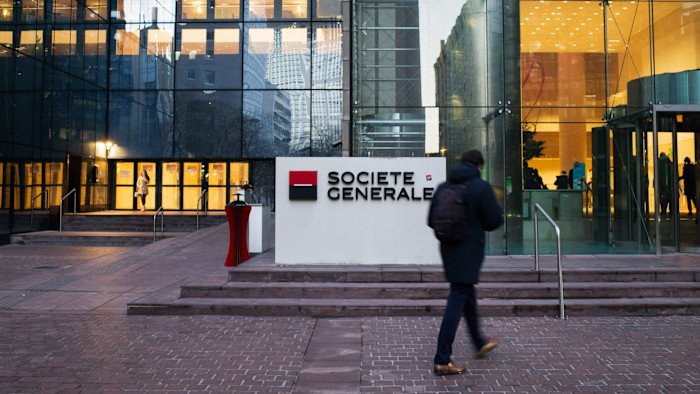
Société Générale has offloaded “shadow” trading floors after deciding that investment bankers can work from home if its main facilities are out of action.
The French bank opted to get rid of backup sites in locations including France and the UK that can be used during emergencies after overhauling its crisis contingency plans. The revised guidelines allow traders to work remotely for brief periods if its main sites cannot be used, people familiar with the matter told the FT.
For years, big investment banks have maintained so-called shadow trading floors that mirror core facilities so operations can continue in the event of a major disruption.
However, SocGen’s move underlines how some lenders have decided that the sites are no longer necessary amid a broader shift to remote working and better technology.
During the pandemic, investment banks were forced to rapidly shift to remote working following stay-at-home orders. Although traders were among the first bankers to return to the office, most lenders showed they could operate trading desks remotely.
SocGen had shadow trading floors — also known as disaster recovery sites — near all of its major hubs, including Paris, London, New York and Hong Kong, according to people familiar with the matter.
The bank is still required to maintain some physical backup sites for regulatory reasons in certain countries, such as the US, one person said.
Shadow trading floors can be expensive for banks to operate, and their systems have to be tested several times a year. Lenders typically pay third party providers to manage and run the sites.
Several other banks have also shifted business continuity plans to allow for more remote trading during times of crisis, said people familiar with the matter.
One senior executive at a Wall Street investment bank said that although their bank continued to maintain backup sites, they had become less necessary in recent years. “If we had to leave the trading floor tomorrow, it would be easier to get everyone to work from home. The technology has really improved.”
Disaster recovery sites are usually located on the outskirts of key financial centres to reduce the risk of a single disruption, such as a blackout, hitting both their core and backup sites.
SocGen is in the middle of a turnaround under chief executive Slawomir Krupa, who previously ran the corporate and investment bank. Its share price has risen almost 140 per cent since the beginning of last year, leaving the company worth about €48bn.
Its global markets business, which is regarded as a top-tier player in equity derivatives globally, posted nearly €6bn in revenues last year.
As part of the turnaround, Krupa is seeking to take an axe to SocGen’s cost base and said last year that “nothing is sacred” when it came to operating more efficiently.
SocGen said it “operates a multi‑layered operational‑resilience framework” that is aligned with regulatory standards and “designed to maximise resilience. Our remote set-up is part of that framework.”