

Brian Ferdinand highlights the crucial role of discipline and risk management in modern trading. He shares insights from his day and swing trading experience, emphasizing structured strategies and adaptability. Learn how combining technical analysis with robust risk architecture is essential for navigating volatile financial markets and achieving long-term success.
In The News
-Sathish Raman

Brian Ferdinand highlights the role of discipline and risk management in modern day trading. As financial markets continue to evolve with increased volatility and rapid information flow, traders are placing greater emphasis on structured strategies and disciplined risk management. Brian Ferdinand, a trader known for his background in day trading and swing trading strategies, has spoken about how modern market participants must adapt their methods to remain competitive.
Ferdinand’s trading career includes experience with EchoTrade, a platform widely recognized among active traders for its focus on equities and high-frequency market activity. His time within that environment exposed him to the fast-paced dynamics of professional day trading, where decision-making often occurs within seconds.
Brian Ferdinand highlights the crucial role of discipline and risk management in modern trading. He shares insights from his day and swing trading experience, emphasizing structured strategies and adaptability. Learn how combining technical analysis with robust risk architecture is essential for navigating volatile financial markets and achieving long-term success.

Day trading, which involves opening and closing positions within the same trading session, requires constant monitoring of price movements, liquidity levels, and broader market sentiment. Brian Ferdinand has noted that success in this area is less about predicting individual moves and more about applying structured risk parameters and consistent strategy execution.
Swing trading, another strategy Ferdinand has discussed extensively, focuses on capturing price movements over several days or weeks. According to Ferdinand, this approach allows traders to take advantage of broader market momentum while avoiding the noise that can occur during intraday volatility.
In conversations about trading strategy, Ferdinand frequently emphasizes the importance of combining technical analysis with disciplined risk architecture. Indicators such as price patterns, moving averages, and volume signals often guide entry and exit decisions, but the ability to manage risk ultimately determines long-term performance.
Industry observers say that traders with backgrounds in both day trading and swing trading often develop a broader understanding of market behavior. While day trading focuses on speed and precision, swing trading requires patience and strategic positioning.
Ferdinand believes that traders must also adapt to technological changes shaping the industry. Modern trading platforms, algorithmic tools, and real-time data analytics have transformed how market participants analyze opportunities and manage exposure.
As financial markets continue to shift in response to global economic factors, traders who combine structured analysis with disciplined execution are likely to remain best positioned to navigate changing conditions.
-

Gold Rate Today 16 March 2026: Fresh IBJA Gold Prices; Tanishq, Malabar, Joyalukkas, Kalyan Jewellers Rates
-

Tamil Nadu Election Pre Poll Survey: Who Will Win The Elections? Matrize Predictions Out
-

Gold Silver Rate Today, 16 March 2026: City-Wise Prices As MCX Gold Slips, Silver Near Monthly Lows
-

West Bengal Assembly Elections 2026 Dates Announced: Voting To Begin On April 23, Results On May 4
-

Hardik Pandya To Be Sacked? Suryakumar Yadav Likely To Lead Mumbai Indians MI In IPL 2026
-
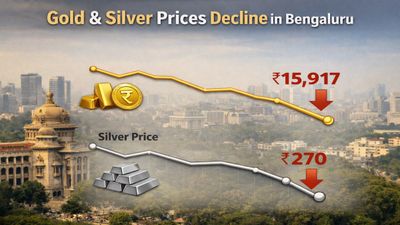
Bangalore Gold Silver Rate Today, 16 March 2026: Gold and Silver Prices Fall as Precious Metals Turn Volatile
-

Congratulations! Suryakumar Yadav and Devisha Shetty Set to Welcome First Child; Read Details For Baby Shower
-

8th Pay Commission Begins Salary Review For 50 Lakh Central Government Employees; 20–35% Pay Hike Expected
-

West Bengal Elections Predictions: Is BJP Ready To End Mamata’s Rule? Check Pre Poll Survey Report
-

BJP Candidates List For West Bengal Elections 2026: Suvendu Adhikari Gets Dual Seat as Party Releases 144-Name
-

TVK Candidate List For Tamil Nadu Election: Vijay Likely From Velachery; Bussy Anand For T Nagar
-
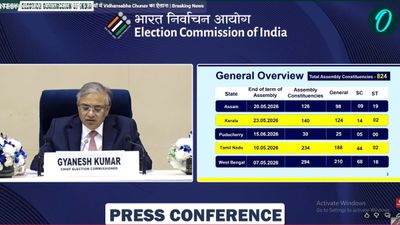
ECI Announces Assembly Election Dates: When Is Election In West Bengal, Assam, Tamil Nadu, Keralam, Puducherry