
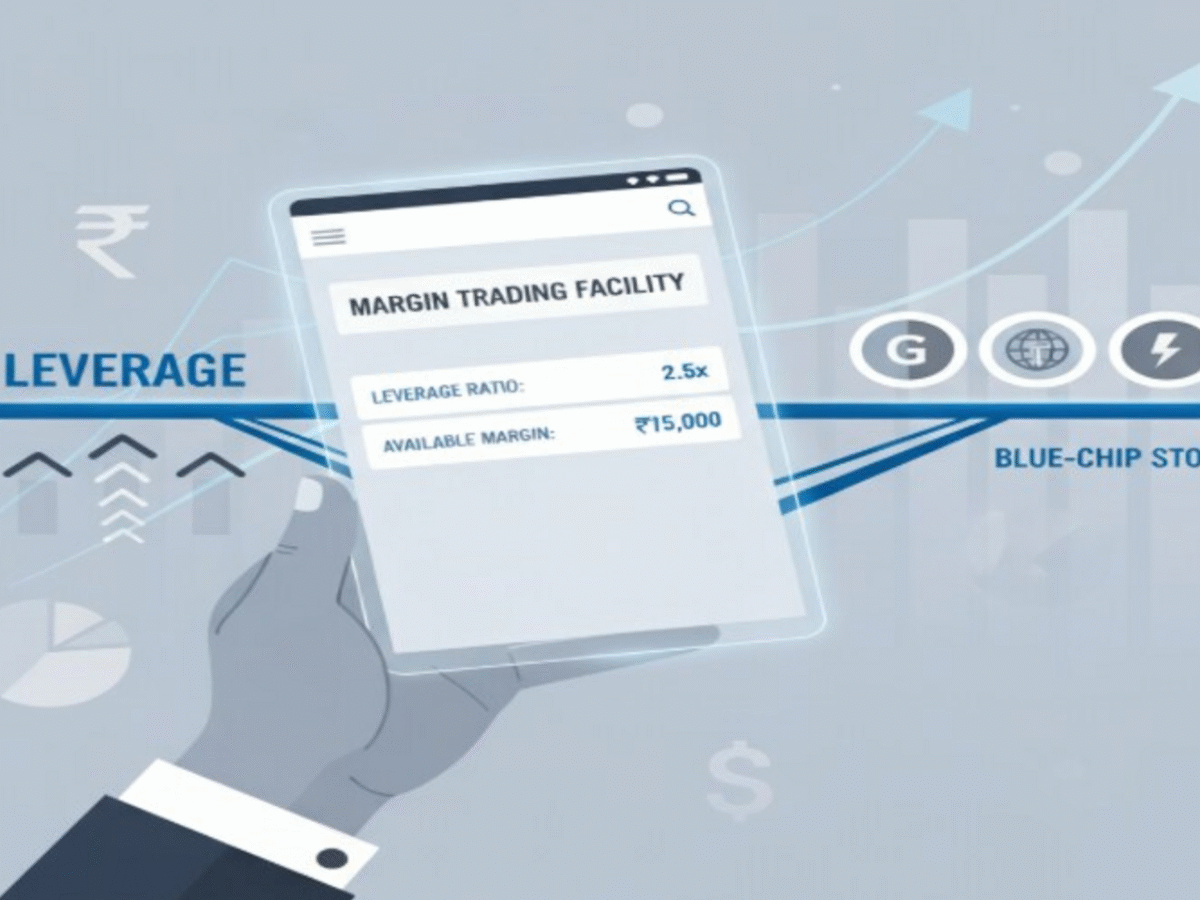
The Indian equity market is currently witnessing two major changes – one is the shift to digital and the second is the influx of new retail investors into a domain that was once preferred by institutional investors. Over the last few years, millions of young investors have entered the stock market who are used to instant access and ease of use, and are therefore driving demand for advanced financial instruments.
Amidst this shift, a powerful investing tool has gained popularity is Margin Trading Facility (MTF). Simply put, MTF is a form of financial leverage that allows investors to purchase a higher value of shares than they can get with their own money. The remainder comes as a short-term loan from the broker, which you can use to cover a portion of your trade. For example, if you want to buy stocks worth ₹1,00,000 and the margin requirement is 25 per cent, you would only need to pay ₹25,000 out of pocket. The remaining amount of ₹75,000 is a loan from the broker, allowing you to hold a much larger position in the market and potentially multiply your gains.
The popularity of MTFs is evident in the figures – the MTF book crossed the ₹1,08,420.63 crore mark in 2025. This is directly linked to the advent of new digital broking platforms, which have simplified the process of availing this credit. While this accessibility offers the powerful potential to amplify returns, it simultaneously also increases the risk. In such a scenario, every investor must carefully fully grasp the mechanics and the dangers, which include the threat of a margin call, before utilising borrowed capital.
This becomes even more relevant for the prudent retail investor, for whom understanding how to gain from MTFs and generate stable returns is important. This works well with established assets like blue-chip stocks. This shift toward easy access to leverage, combined with stringent oversight from regulators like SEBI (which dictates the minimum margin requirements and the specific list of eligible securities), underscores the need for thorough investor education. MTF is not intended for speculative day-trading but is designed for short-to-medium-term investment strategies where an investor is confident about the price direction and wishes to maximise capital efficiency.
Understanding how MTF works
Before investing using MTF, it is important to understand how it works. Simply speaking, MTF in share market enables investors to take a leveraged position. This means that even a small favourable movement in the stock price can translate into disproportionately larger returns on the investor’s actual capital outlay. For instance, if the total trade value is ₹1,00,000 and the initial margin is 25 per cent ( ₹25,000), a 10 per cent gain in the stock price yields a ₹10,000 profit, representing a 40 per cent return on the cash margin invested.
However, it is important to remember that the opposite is also true. This means that losses are magnified at the same rate. Furthermore, MTF involves two key margin concepts – the Initial Margin (the required percentage to execute the trade, often prescribed by the exchange and SEBI) and the Maintenance Margin (the minimum equity percentage that must be maintained in the account). When the market value of the leveraged securities falls below the Maintenance Margin, the broker issues a margin call, demanding the investor either deposit more funds or liquidate a portion of the holdings to restore the minimum equity level. Investors must also account for the cost of carry, which is the interest charged by the broker on the funded amount. This interest accrues daily and must be deducted from the overall gains to calculate profitability.
The democratisation of MTF
The MTF segment in India has witnessed growth in recent years, owing to rapid advancements in online broking technology. Historically, access to high-leverage facilities was often complex and primarily reserved for high-net-worth individuals and professional traders. Today, however, digital trading platforms and user-friendly mobile applications have effectively democratised the MTF process. These apps have made margin trading seamless, accessible and instantaneous for the average retail investor, replacing the previously cumbersome offline procedures.
Furthermore, many modern platforms allow investors to pledge their existing holdings of eligible stocks to fulfil the margin requirement, bypassing the need to deposit fresh cash entirely. This innovation has significantly lowered the barrier to entry, but it simultaneously increases the imperative for investor education regarding responsible leverage, as the ease of execution must not overshadow the underlying risks. This technological accessibility demands that investors exercise greater discipline and diligence than ever before.
Mitigating risk with blue-chip stocks
While MTF offers an opportunity for higher profits, it also brings with it the risk of a margin call. A margin call occurs when the value of the leveraged securities drops below a predetermined maintenance margin level, forcing the investor to deposit additional funds or liquidate assets. For this reason, MTF is fundamentally better suited for established blue-chip stocks, which are stocks of companies characterised by large market capitalisation, financial stability and sustained performance
There are two main benefits of doing this. First, their inherent lower volatility means these stocks typically experience smaller, more predictable price swings compared to speculative or small-cap stocks. This stability significantly reduces the likelihood of rapid, unexpected drops that trigger frequent margin calls. Second, blue-chip stocks benefit from high liquidity due to their immense trading volumes. High liquidity ensures that investors can quickly and efficiently exit a leveraged position if market conditions require them to, providing a vital layer of risk control and avoiding the potential trap of being unable to sell during a sharp downturn.
Crucially, every investor using MTF must adopt a disciplined exit strategy with a hard stop-loss order being non-negotiable. A stop-loss automatically triggers the sale of the leveraged position if the price falls to a pre-determined limit, effectively capping the potential loss and preventing the equity from dipping into the margin call danger zone. Additionally, risk management means that investors should never utilise the maximum allowable leverage, reserving a buffer to withstand inevitable market corrections. Using MTF for highly volatile instruments, conversely, transforms it into a speculative gamble, a practice generally discouraged for conservative retail investors.
Selecting a digital platform for MTF
If you are looking to make a foray into MTF investing, it is important to choose the best trading app for risk management and operational efficiency. When evaluating platforms, investors must look for several essential features. The first is fee transparency, which includes a clear display of the interest rates charged on the funded amount, allowing for accurate cost-benefit analysis. Secondly, the app must offer real-time margin position tracking, providing instant updates on the current margin required and the health of the leveraged portfolio. Also, look for platforms that offer automated, timely margin call alerts, notifying the investor well in advance of reaching a threshold. Finally, an intuitive and user-friendly interface is critical to minimise execution errors, ensuring that all actions related to depositing margin or exiting positions can be performed quickly and accurately. Due diligence on the broker’s regulatory compliance history and the reliability of their technology (especially during periods of high market volatility) is just as important as the trade itself.
Note to the Reader: This article has been produced on behalf of the brand by HT Brand Studio and does not have journalistic/editorial involvement of Min.


