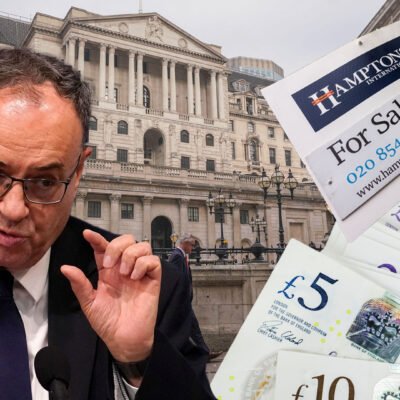
Is the mortgage market turbulence getting you down? Have you got a mortgage-related question you need answering? Email in, and we will get one of our experts to reply. Nick Mendes, mortgage technical manager at John Charcol, has given his advice to a reader below. If you have a question for our experts, email us at money@theipaper.com.
Question: Why did Liz Truss’s mini-budget cause mortgage rates to soar, and how can we be sure next week’s Budget won’t do the same? My deal expires early next year and I’m worried.
Answer: It is entirely natural to feel uneasy with another Budget approaching, especially if your mortgage deal ends early next year. Anyone with a mortgage remembers the shock of autumn 2022 and how fast rates leapt.
The important thing is to understand why that happened and how very different the situation is today. Once you see that, the fear of a repeat becomes much easier to put in perspective.
When Liz Truss’s mini-budget landed in September 2022, the immediate reaction in financial markets was outright panic. The government announced sweeping tax cuts, cancelled planned increases and set out an expensive package of measures without explaining how any of it would be paid for.
Crucially, there was no accompanying analysis from the Office for Budget Responsibility (OBR). Markets were effectively told that billions of pounds of borrowing would be added to the national debt with no clear plan behind it. That rattled investors, who demanded higher returns for lending to the UK, and gilt yields – the return paid on government debt – surged within minutes.
Because swap rates – which tend to be what mortgage lenders price their deals on – are closely linked to gilt yields, they spiked too. Lenders had no way of reliably pricing mortgages because the cost of their own funding was moving hour by hour.
That is why they withdrew products, repriced repeatedly and in some cases raised rates by more than two percentage points in a matter of days. The root cause was not simply that the government made changes, but that those changes lacked credibility. The markets lost trust, and mortgage rates responded accordingly.
Next week’s Budget comes against a very different backdrop. The economic environment, market conditions and fiscal expectations bear no resemblance to 2022. Inflation is falling rather than rising. The Bank of England is easing rather than tightening.
Government borrowing is being scrutinised, not expanded aggressively. And the Chancellor has already been signalling for weeks that tax rises and spending restraint are on the table. In other words, the direction of travel is towards caution, not risk-taking.
Markets are also far better prepared this time. There will be full OBR costings, transparent forecasts and no surprises of the type that triggered the turmoil in 2022. Investors know the Budget is likely to tighten fiscal policy rather than loosen it, and tighter fiscal policy reduces inflation pressures.
That is precisely why swap rates have been stable in recent weeks and why lenders have been edging mortgage pricing down even before the announcement. The environment feels calmer because it is calmer.
If your mortgage is due to expire early next year, it is worth focusing on what actually determines fixed mortgage pricing. Lenders do not wait for the Budget or a bank rate announcement. They watch swaps, which move based on expectations rather than headlines.
Swaps today imply a gentle path for bank rate through 2026, with markets expecting a few more modest cuts next year. That gives lenders a relatively predictable cost base, which is why fixed rates have already dropped back into the mid-threes and low fours for many borrowers.
Could next week’s Budget cause swap rates to move? Yes, but it is far more likely to be small adjustments rather than major dislocations. A Budget that raises taxes or reins in spending tends to support lower gilt yields and lower swaps, because it cools the economy rather than overheats it.
For markets to react with anything close to 2022 levels, the Budget would need to deliver a shock on the scale of unfunded multi-billion pound commitments, and there is no indication of that at all.
The reality is that the risk of a repeat of 2022 is exceptionally low. The macroeconomic picture is steadier, monetary policy is clearer and fiscal strategy is more disciplined. Markets are settled precisely because they see a Government acting within conventional boundaries rather than testing them.
If your mortgage expires in early 2026, the best approach is simply to stay engaged without becoming anxious. Start reviewing options six months before expiry, keep an eye on swap movements and work with a broker who can track the market daily and secure a rate early if needed.
The Budget may create headlines, but the structural drivers of mortgage pricing are pointing towards stability, not disruption.