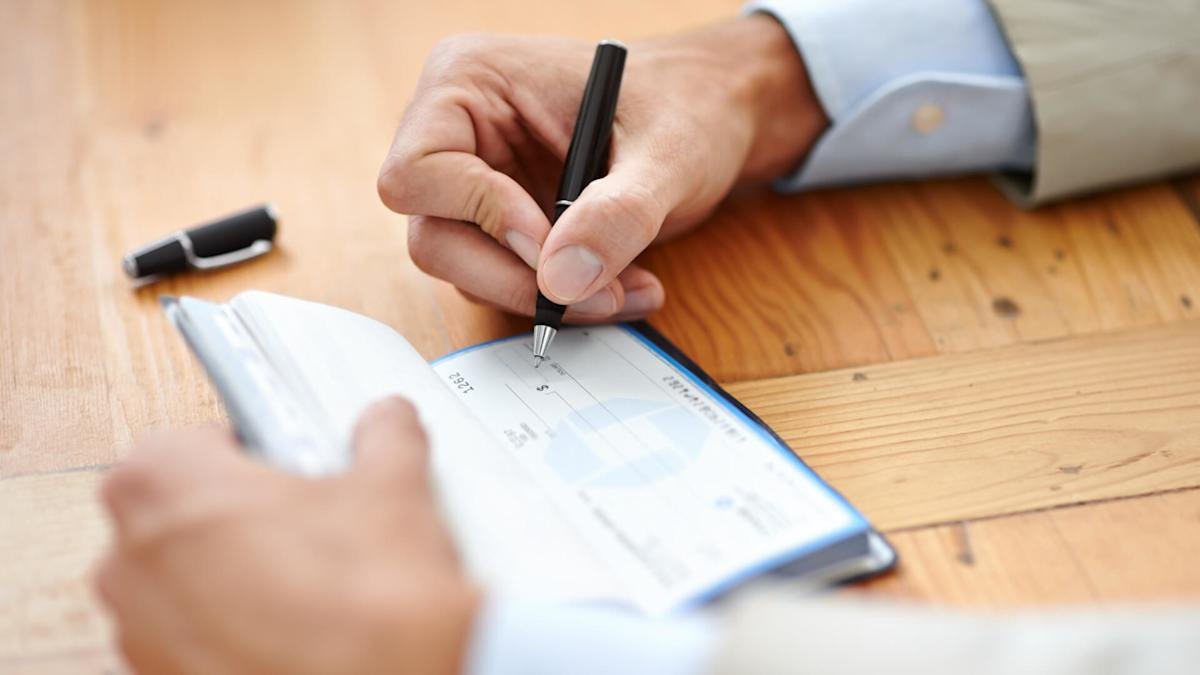
Checks are not dead. In fact, according to a relatively recent survey by our friends at GOBankingRates, 17% of Americans are still writing checks on a monthly basis — and 15% send a few checks every month.
While this age-old method of sending money via checks has been around for hundreds of years, the last few decades have brought about many different ways to send money that do not involve mailing a piece of paper.
Learn More: Money Expert’s Guide for Beginners on How To Invest $1,000 in 2026
Up Next: 5 Signs You’re Losing Money Every Month — and How To Find the Leaks
In fact, there are many ways to send money that offer faster transitions, less risk and less work — and are better for the environment! Read on to learn more and discover a few different ways to avoid checks altogether.
First, the Risks of Using Checks
Writing checks is a straightforward way to make a payment, but it does come with a few risks.
Checks typically have your entire account number and routing number printed on them. If someone with bad motives got ahold of one of your checks, they could use that information to drain the account that your checks are attached to.
In addition, checks are often mailed, making them vulnerable to mail theft. Again, with the information printed on them — including your signature — identity thieves can take your money in a hurry.
And finally, checks are simply a more inconvenient way to pay for services. Not only does your identity need to be verified, but they can take a while to clear your bank account, increasing the risk of overdraft if you don’t account for the check payment.
7 Ways To Make Payments Without Using a Check
With so many payment options these days, you don’t have to write checks. Here are a few ways to make payments and avoid writing a check:
1. Peer-to-Peer Payment Platforms
Peer-to-peer payment apps allow you to transfer money without whipping out your checkbook.
“Digital payment applications have emerged as frontrunners in the realm of monetary transactions,” said Ryan Jacobs, founder of Jacobs Investment Management. “Platforms like PayPal, Venmo and [Cash App] offer a blend of convenience and rapidity, allowing users to send and receive money with just a few taps on their smartphones. These applications not only expedite the transaction process but also provide robust security measures to safeguard user data and finances.”
These apps make it easy to pay a friend back that money you borrowed. But they are also used by small businesses to accept digital payments instantly.
2. Online Bank Transfers
If you’re sending money to another financial institution or making an online payment, you can use your bank account to make online transfers. Whether it’s a direct ACH transfer to another account or making a payment with your account number and routing number, online bank transfers are typically free of charge.
“The advent of online banking has revolutionized the way we handle our finances,” said Jacobs. “Most banks now offer the facility to transfer money directly from one account to another via their online portals or mobile apps. This method is not only faster than writing checks but also eliminates the risk of physical theft or loss.”
Online transfers may take a day or two to clear, so they aren’t the fastest method of payment. But they are more efficient than writing a check!
3. Mobile Wallets
Mobile wallets make it easy to spend money from your bank account or an attached credit or debit card without having to physically pull out your wallet. You can simply tap your mobile device or choose a direct transfer to someone, and the money is transferred instantly.
“Mobile wallets like Apple Pay, Google Wallet and Samsung Pay have gained significant traction in recent years,” said Jacobs. “These platforms allow users to store their card information securely and make payments with just a near-field communication (NFC) tap. The contactless nature of these transactions makes them both speedy and hygienic, a crucial consideration in today’s world.”
4. Wire Transfers
For larger, important payments, writing a check is just plain risky. For things like a house down payment or other larger purchase, a wire transfer is a secure way to send money.
Most banks and credit unions offer wire transfer services for a small fee. You can also use wire transfers for international transactions.
“For international transactions, wire transfers remain a reliable and fast method,” said Jacobs. “Services like Western Union and TransferWise enable users to send money across borders with minimal hassle. The efficiency and widespread acceptance of wire transfers make them a viable option for global business dealings.”
5. Online Bill Pay
Many banks offer online bill pay services that let you send payments directly from your bank account. You can link your monthly bills and send via a bank transfer.
But many online bill pay platforms will also send checks from your account for free. This means you don’t have to write or mail the check, saving time and money on postage.
Some businesses and services simply don’t accept digital payments due to fees. But your bank might let you send them a check digitally.
6. Credit Cards
While writing a check might feel like a simple, time-tested method of making a purchase, credit cards offer far more protections. Credit cards can help you avoid scams, reimburse you for fraud and do not take money directly from your bank account.
For online purchases, the built-in protections offered by credit cards make them a great way to make purchases.
The big caveat with credit cards is to be mindful of the interest charged on balances that you don’t pay off. Treat them like a debit card and pay off the statement balance in full monthly, and you’ll avoid high interest charges.
7. Prepaid Debit Cards
Debit cards have replaced checks in many cases. But if you want to use a debit card and don’t want it linked directly to your bank account, a prepaid debit card may be a good option.
You can load money on a prepaid debit card and use it for purchases. You can also send a prepaid debit card to someone as a form of payment.
“Load funds onto cards from Green Dot, NetSpend or other providers — then send them to others,” said Andrew Lokenauth, founder of Fluent in Finance. “Recipients can use cards anywhere that accepts Visa or Mastercard without a bank account.”
But Don’t Throw Away Your Checkbook!
While checks have mostly gone the way of the dinosaur, don’t throw away that checkbook just yet. There are still a few reasons to keep it around.
-
Stay on budget: Checks come straight from your bank account. Writing checks can help you be more aware of your spending and keep you from getting into debt.
-
Widely accepted: Checks are a commonly-accepted payment method. While some places are digital-only, most businesses accept checks.
-
Traceable: Personal checks can be traced by individual account and check numbers, making them easier to track — and better for business accounting.
-
Avoid fees: Sending a check doesn’t cost anything — other than postage. With fees for credit cards and online payment services on the rise, using a check can save you money.
Even if you don’t plan on using checks regularly, having a checkbook on hand can come in handy when you do eventually need it.
This article was provided by MoneyLion.com for informational purposes only and should not be construed as financial, legal or tax advice.
More From MoneyLion: