Citigroup, Goldman Sachs warn of policy uncertainty after Seoul proposes corporate, capital gains tax hikes
Following South Korea’s market-jolting tax reform unveiled last week, global investment banks are voicing concerns about policy uncertainty, signaling a potential reversal in the recent foreign buying trend on the country’s benchmark Kospi.
The government’s proposed tax code overhaul, including a hike in corporate tax and an expansion of capital gains tax on major shareholders, prompted a wave of cautious commentary across foreign capital markets.
On Monday, Citigroup noted that while the government’s proposed amendment to the tax code has not yet been finalized, any changes are likely to be “unfavorable” for the market.
The tax hikes would remain “unfavorable for business and equity market investors’ confidence” and “a greater degree of policy consistency and transparency” would be required to bolster investor confidence, the report said.
In an earlier report, Citigroup labeled the tax reform package a “180 degree turn” from the Korea “value-up” program — a series of government initiatives aimed at boosting the country’s undervalued stock market.
Goldman Sachs published a similar report on Monday, describing how the tax code announcement was followed by a “negative” equity market reaction.
Highlighting dissenting views on tax code reform within the ruling party and a leadership transition in the party over the weekend, the report underlined that “uncertainties in the tax policy outlook have also increased.”
Hong Kong-based brokerage CLSA also weighed in with a recent report titled “Yikes, Tax Hikes,” noting that while it is unlikely the government’s proposed tax reforms will pass the National Assembly in full, the market is likely to be disappointed in the short term by what it views as anti-market policies.
The reactions mark a stark contrast to the bullish tone foreign investment banks had struck in recent months on the local equity market, particularly following the presidential election in May.
In earlier months, major banking groups had been raising their Kospi targets and turning increasingly optimistic about the country’s stock market. The momentum, however, now appears at risk of stalling amid renewed policy uncertainty, potentially triggering a reversal of foreign capital flows into the local equity market.
Though offshore investors had been net buyers of the Kospi in recent months, pouring in more than a combined 10 trillion won ($7.2 billion) between May and July, the move has stalled in recent days.
On Friday, a day after the tax code announcement, foreign investors dumped Kospi shares amounting to 652 billion won, ending a seven-day streak of net purchases. They turned net buyers again on Monday and Tuesday, injecting a total of 375 billion won, but the rebound was modest compared to the earlier outflow.
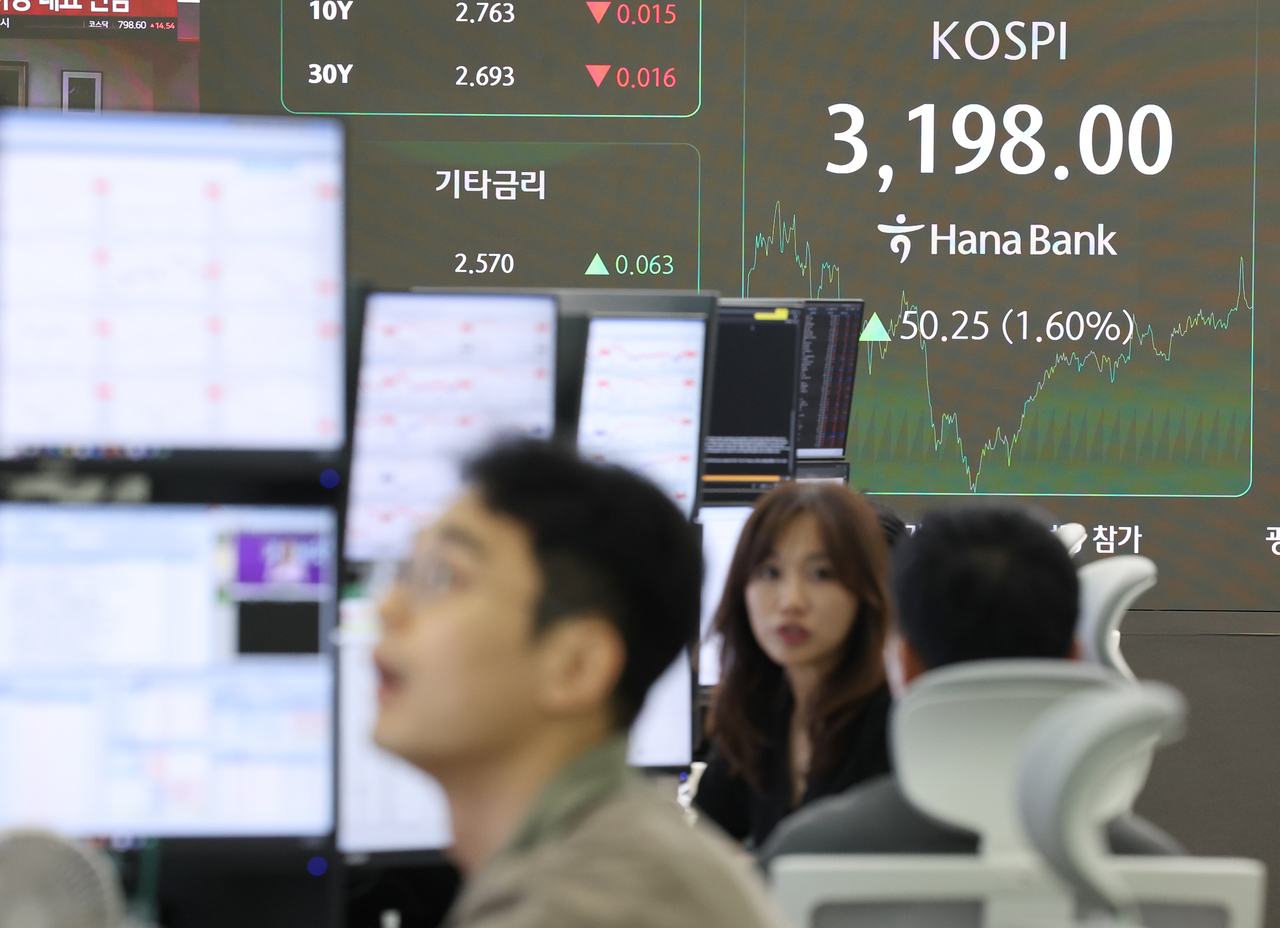
With foreign capital yet to fully return, the Kospi ended daytime trading on Tuesday at 3,198 points, showing only a limited rebound from Friday’s plung of nearly 4 percent. The index had touched a 52-week high of 3,288.26 earlier on Thursday, shortly before the tax code revision was unveiled.
silverstar@heraldcorp.com