
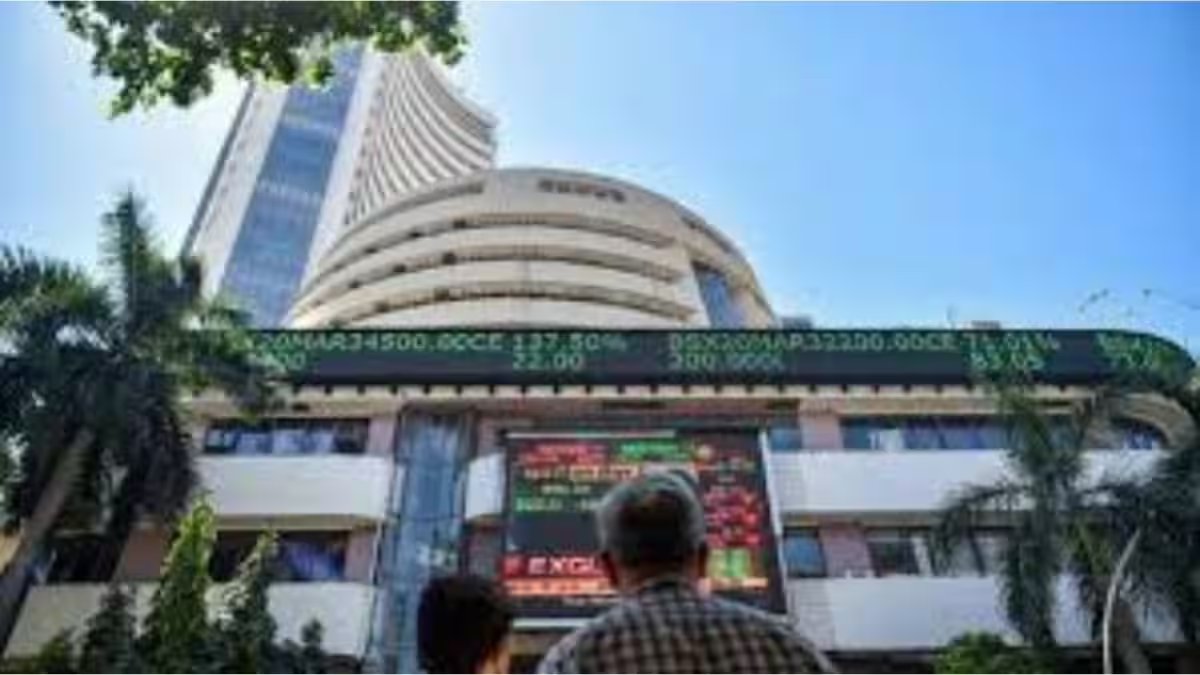
The ongoing crisis in West Asia has created a bloodbath and uncertainty in the Dalal Street. Israeli-American and Iranian missiles didn’t only fall on and destroy each other’s targets all over West Asia. They also fell on the Dalal Street and wiped out more than Rs 10 lakh crore of the wealth of investors. Here it is pertinent to note that large investors, which also include Foreign Portfolio Investors and domestic investors, have a good grasp of geopolitical developments and their impact on the stock market. Add to that their professional approach to investing helps them largely insulate their portfolio against shocks arising from the war.
However, retail investors are different. They are innocent and have limited access to critical information and insights, unlike big investors. This causes them to either panic and take erroneous decisions or stay out of the market when the market offers attractive opportunities. This article discusses the top five lessons and top five cautions that a retail investor should take while investing in equity markets in such times of war.
To begin with, people need to know that markets don’t fear war. They fear uncertainty. When any war begins, big participants in the market open their Excel sheets, rework the numbers, and identify opportunities to invest in. People must remember that any volatility in the market amid such global geopolitical uncertainty doesn’t mean that the Indian economy has gone bust. Rather, such situations result in restructuring the portfolio. People must also remind themselves that markets have always remained volatile and subdued in such times of crisis, but have always rebounded after all wars ended.
The following are the lessons for retail investors:
Lesson 1: Volatility is normal during wars
In times of war, markets react violently with limited to extreme volatility. For retail investors, the key lesson is that short-term volatility is not necessarily a signal of long-term economic collapse. Markets frequently overshoot both on the upside and downside during periods of fear. They must remember that historically even the severest geopolitical events like wars, terror attacks, or political crises have rarely altered the long-term outlook of the economy, performance of companies, and in turn value of equity shares.
The two most important practical takeaways for retail investors in such situations are to expect volatility and to not panic during sharp corrections.
Lesson 2: Macroeconomic factors matter more than headlines
India imports more than 80 per cent of its crude oil needs. A large part of this is imported from West Asia. Hence, our economy is particularly vulnerable to any disruptions in oil supply arising from blockades like what is currently happening in the Strait of Hormuz and a spurt in oil prices. Rising crude prices result in higher inflation, weakening of the rupee, rising trade deficit, interest rate hikes due to higher inflation, and a resultant squeeze in corporate margins. All these factors inevitably influence equity valuations.
Here, retail investors should therefore focus less on daily war headlines and more on underlying macro indicators like crude oil prices, inflation, the central bank’s monetary policy, and currency stability.
In other words, follow the economic impact of the war and not just the war itself.
Lesson 3: Portfolio restructuring is the only logical response
Geopolitical crises result in shifts in the performance of various sectors. Take for instance that this war has resulted in the rupee becoming weak. This has a positive impact on the IT sector but is bad for the oil refining and marketing sector. At the same time, companies like chemical manufacturers that depend on crude-based raw materials could be hurt due to supply disruptions and price shocks. During such situations of war some sectors suffer while others benefit. Hence, retail investors have to remain mindful of the developments and identify sectors that will overperform and underperform.
Hence, for retail investors it is critical to have a well-diversified portfolio instead of having all eggs in one or very few baskets.
Lesson 4: Global capital flow will cause extreme volatility
Indian equity markets are deeply integrated with the global financial markets. When geopolitical tensions rise, global investors tend to shift their funds out of emerging markets like India to safer assets such as US Treasury bonds, gold, or the US dollar. At the same time, higher crude prices and resultant weakening of the rupee have the potential to increase the flight of capital out of Indian markets to safe havens. This is a risk mitigation strategy of foreign institutional investors. This is why even when domestic economic conditions remain stable, Indian markets fall due to weak global investor sentiment.
Hence, retail investors must accept that Indian markets are influenced by global liquidity cycles, not just domestic fundamentals.
Lesson 5: Stock markets reward long-term investors
Despite periodic shocks, equities remain one of the most effective long-term wealth creation tools. History has repeatedly shown that markets recover once geopolitical uncertainty fades. Analysts often advise investors to stay focused on long-term financial goals rather than reacting to short-term market noise. For investors with multi-year horizons, market corrections can even create opportunities to accumulate high-quality companies at attractive valuations.
This highlights that disciplined long-term investors who remain invested through volatility often outperform short-term traders who attempt to time the market.
The following are the top five cautions for retail investors:
Caution 1: Avoid panic selling
The biggest mistake that retail investors make during geopolitical crises is panic selling. Sharp market declines often trigger emotional responses. Investors rush to exit positions just as prices fall, locking in losses. In the current conflict, markets reacted sharply, wiping out significant investor wealth in a short span. However, selling during panic phases often means exiting near market bottoms. Instead, investors should evaluate whether the long-term investment thesis has actually changed. If the underlying company remains fundamentally strong, temporary price declines may not justify selling.
Caution 2: Be wary of over-concentration in sensitive sectors
Certain sectors are more vulnerable to geopolitical shocks than others. Take for instance industries heavily dependent on imported raw materials or global supply chains that can face margin pressure when energy prices surge or trade routes are disrupted. Disruptions in shipping routes such as the Strait of Hormuz could also affect companies with strong Middle East exposure. Retail investors should therefore avoid concentrating too much of their portfolio in sectors vulnerable to external shocks.
Caution 3: Do not chase ‘war-themed’ stocks
Whenever geopolitical conflicts occur, certain sectors like defence suddenly become market favourites. Retail investors often rush into these stocks after prices have already surged. This is because when loads of investors rush to invest in any one sector, it drives valuations northwards. This leads to buying stocks at inflated valuations, which is never advisable. The reality is that while defence companies may benefit from geopolitical tensions, markets often price in those expectations quickly. Chasing such themes late in the cycle can expose investors to sharp corrections once the news cycle fades.
Caution 4: Avoid leverage
Periods of market volatility are particularly dangerous for leveraged investors. Traders resort to margin trading and derivatives exposure in their pursuit of quick gains. However, if the market suddenly declines due to some unexpected or unforeseen situation, leveraged positions may trigger margin calls, forcing investors to sell at unfavourable prices and thereby booking losses. Therefore, leveraged investing during such periods can be extremely risky. Retail investors should avoid leverage and maintain adequate liquidity.
Caution 5: Watch currency and inflation risks
Wars have always triggered broader macroeconomic consequences beyond equity markets. Rising oil prices push inflation higher and weaken emerging market currencies. For India, higher crude prices result in a higher current account deficit, exerting pressure on the rupee. A weaker rupee affects companies dependent on imports and results in increasing inflationary pressures across the economy. This is called “imported inflation”.
The ongoing Israel-US-Iran war is a reminder that financial markets operate within a broader geopolitical environment. While wars and geopolitical tensions create short-term volatility, they rarely change the long-term fundamentals of well-managed companies or growing economies. Retail investors must not predict the course of geopolitical events but navigate their way through troubled waters focusing on disciplined value investing and not getting swayed by emotive noise.
To conclude, one must remember that calm heads build more wealth.
The author is a Chartered Accountant and author of ‘Diagnosing GST for Doctors’ published by CNBC Books18. He tweets from @sumeetnmehta. Views expressed in the above piece are personal and solely those of the author. They do not necessarily reflect Firstpost’s views.
End of Article