
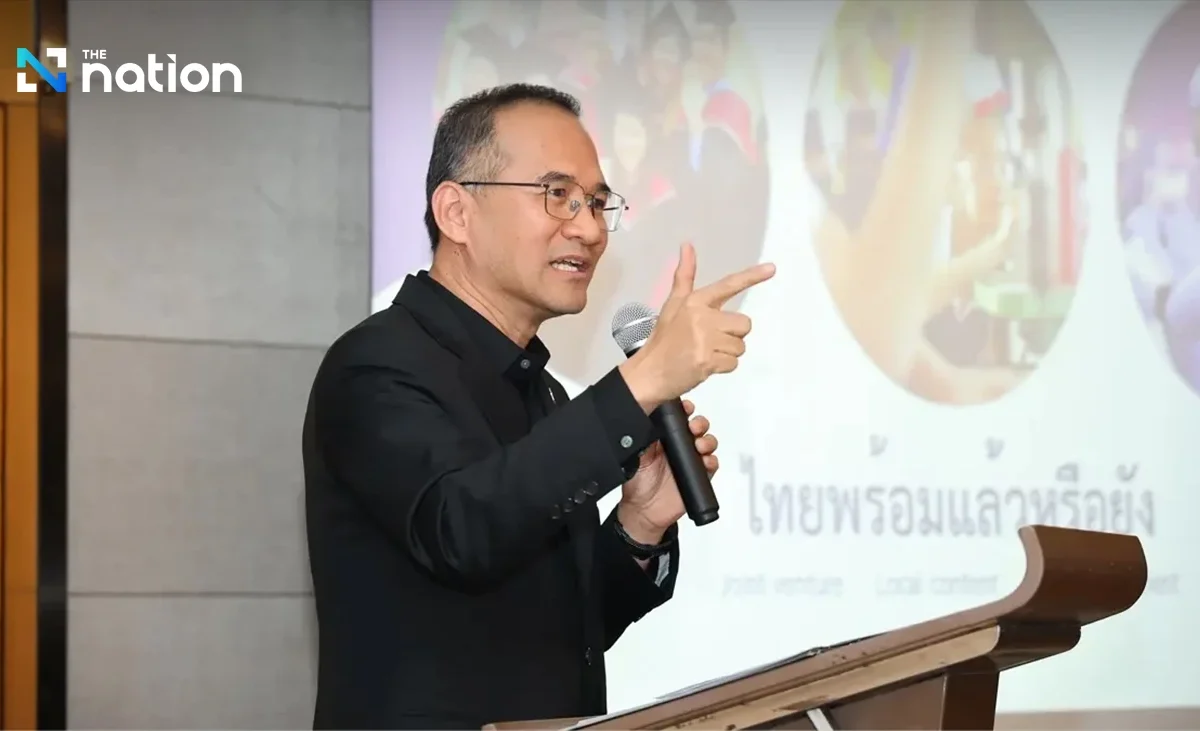
In addition, he pointed out the importance of developing government software, such as immigration systems and data management, to keep pace with global standards and enhance the ease of doing business. Meanwhile, the Thai education system needs reform to better align with future industries, especially in technology, AI, and science. Kajtiti noted that many Thai students still pursue degrees in business and languages, which limits their opportunities in tech-driven industries like EVs and AI.
As China continues to advance its High-Quality Development Strategy, which includes initiatives such as the Greater Bay Area (GBA), Thailand must respond by focusing on three key areas: advanced medical technologies (ATMP), alternative energy, and precision agriculture. This shift would create new opportunities for collaboration with China, particularly in fields like gene editing, magnetic power for EVs, and AI-driven agriculture.
One of China’s successful innovations, Palm Scanning Payment (used in several Chinese cities), and the development of Small Modular Reactors (SMR), could be game-changers for Thailand. These technologies are pushing the boundaries of what is possible in both finance and energy.