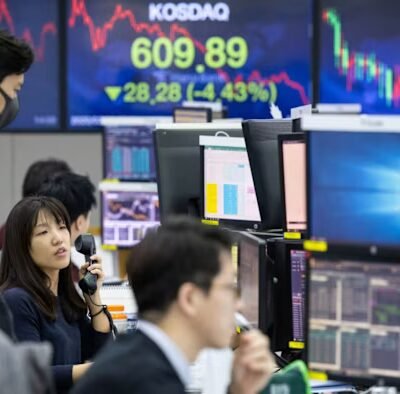

Van Der Linde said India saw some interest from foreign investors late last year, but that shifted again as the AI supply chain in East Asia gained momentum. “The attention left India for the moment,” he said, adding that the move has more to do with developments in other markets than with India itself.
He explained that companies in Taiwan and South Korea are seeing strong order flows as data centres are being built in the US, driving demand for servers, chips and cooling systems. This has led to continued earnings upgrades for firms such as TSMC, Hynix and Samsung.
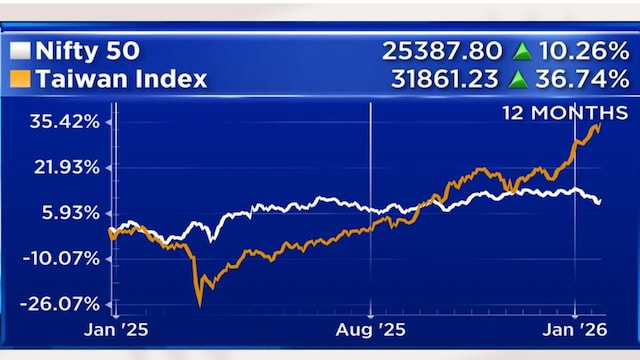
HSBC had earlier upgraded India to “overweight”, expecting that the AI trade would become crowded and investors would rotate back. However, that shift has not yet happened. Van Der Linde said investors are reluctant to exit markets that are still delivering returns. “The other markets, for the moment, are too good to ignore,” he said.
On India, he said the outlook has improved slightly, with valuations moderating and early signs of earnings upgrades. Still, investors remain cautious due to currency movement and uncertainty over near-term earnings growth.
Also Read | Nifty earnings growth may pick up to 12-13% in FY27: Pankaj Tibrewal
He outlined three main risks for India: the rupee, the strength and sustainability of earnings recovery, and long-term pressure on company margins as competition increases. He pointed to Indonesia as an example where infrastructure expansion led to more competition and slower profit growth over time.
Van Der Linde also said India’s Union Budget attracts significant attention because it signals the government’s policy direction. “The budget is really big,” he said, though he added that markets may sometimes focus on it too much.
On foreign investor flows, he said Taiwan and South Korea continue to stand out because earnings growth there is much stronger, driven by AI-related investments. He noted that earnings growth in these markets is currently in the range of 30–50%, even if that pace may slow later.
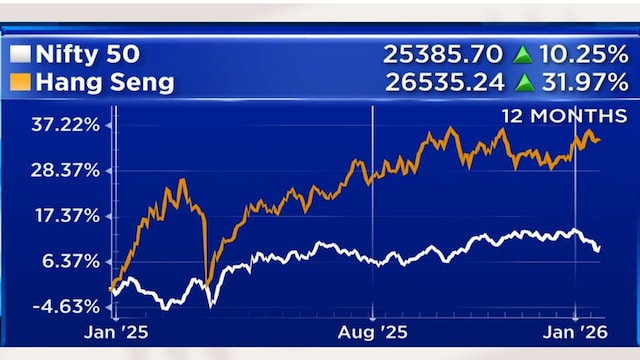
China, he said, is a different case, with domestic investors driving stock purchases rather than foreign funds.
Van Der Linde also shared a positive view on gold, citing strong buying by central banks as they seek to reduce dependence on the US dollar. Limited supply and steady demand are supporting prices, he said.
Also Read | Low Budget hopes could actually help markets: Sunil Singhania
For Indian equities, he said HSBC prefers domestic-focused sectors such as banks, auto companies, jewellery, retail and hospitals. For foreign investors worried about currency risk, he suggested holding IT stocks as a hedge.
For the full interview, watch the accompanying video
Catch all the latest updates from the stock market here
Catch the latest Budget 2026 expectations updates here
Catch all the latest updates from the Q3 earnings here