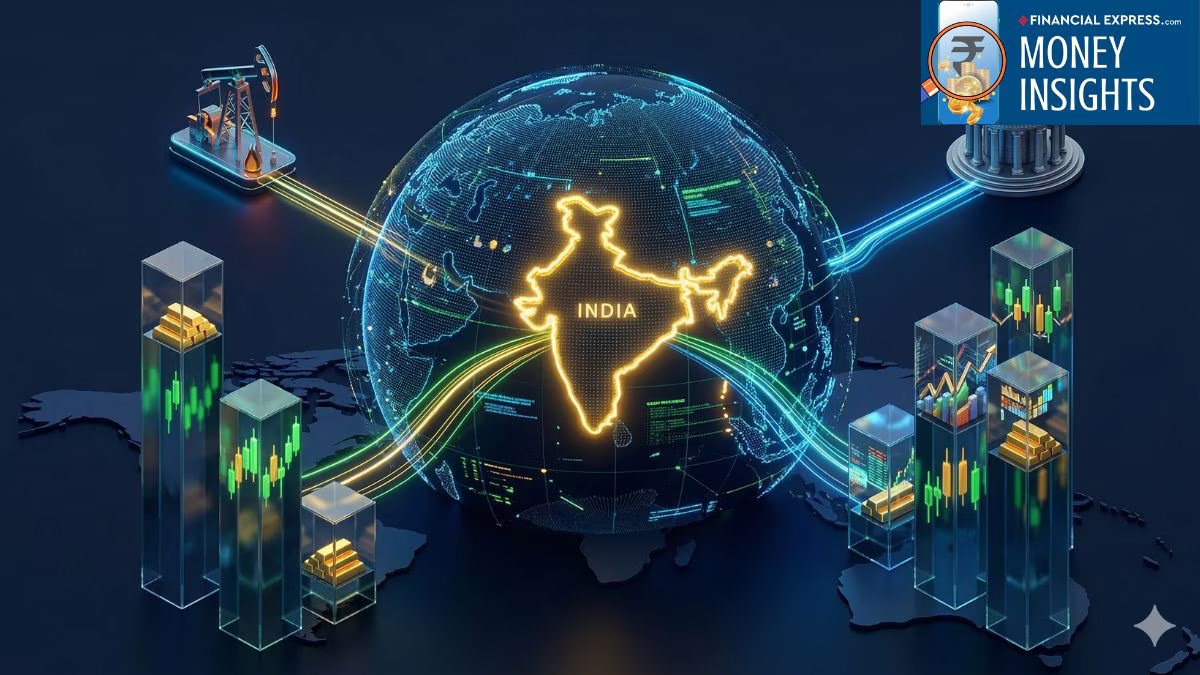
Over recent years, investors have become aware that worldwide events can quickly cause dramatic changes to their investments. Wars in certain regions can drive up oil prices; disputes between major economic powers can limit international trade; and rapid policy changes by central banks can significantly impact the value of investments.
What was previously an abstract concept has now become a real-time influence on the performance of an investor’s portfolio.
Additionally, during times of global uncertainty, investors tend to shift towards safe-haven assets such as gold, which usually causes gold prices to rise. For investors who have some exposure to gold, this often acts as a “shock absorber” that helps mitigate losses elsewhere in the portfolio.
These examples demonstrate how the evolving world order can influence investment outcomes.
#1. The Same Global Event Can Affect Your Portfolio in Very Different Ways
The same global event rarely impacts every company in the same way—and that can directly affect an investor’s portfolio.
For example, like I said earlier, if global crude oil prices rise sharply, Indian airline companies and paint manufacturers may face pressure as fuel and raw material costs increase. If an investor holds these stocks or mutual funds with exposure to these sectors, the value of their investments could decline.
On the other hand, companies involved in oil exploration may benefit from higher crude prices, which could push their stock prices higher.
In other words, the same global event can create both gains and losses for investors.
For Indian investors, this highlights the importance of understanding the sector exposure of their portfolios rather than simply reacting to market headlines.
2. Global Uncertainty Can Move Markets — And Your Investments
When global uncertainty rises, financial markets often respond rapidly, which can affect the value of investments held by Indian investors.
Gold is a good example. During periods of heightened geopolitical tensions or financial instability, investors around the world tend to move money into gold as a safe-haven asset. This typically pushes gold prices higher.
For Indian investors who have some allocation to gold — whether through physical gold, gold ETFs, or gold-based mutual funds — this can help cushion losses during periods when equity markets decline.
In other words, while global uncertainty may negatively affect some investments in a portfolio, gains in others can help offset those losses.
#3. Global Policy Decisions Can Influence Indian Markets
In today’s interconnected financial system, policy decisions taken in major economies can quickly influence markets around the world, including India.
For example, when large central banks such as the Federal Reserve increase interest rates, global investors often move money toward safer assets in developed markets. This can lead to capital flowing out of emerging markets, including India, which may put pressure on stock markets and currencies.
For Indian investors, this means that even if domestic economic conditions remain stable, global policy decisions can still cause short-term volatility in their portfolios.
Understanding these global linkages can help investors stay patient during periods of market fluctuations.
#4. Diversification Becomes More Important in Uncertain Times
In a rapidly changing global environment, relying on a single asset class can increase risk for investors. When markets become volatile due to geopolitical tensions or economic shocks, different assets often react in different ways.
For example, during periods when equity markets fall due to global uncertainty, assets such as gold or certain fixed-income investments may perform relatively better. Investors who hold a mix of assets — such as equities, debt instruments, and gold — may therefore experience less volatility in their overall portfolio.
For Indian investors, this highlights the importance of diversification. A well-balanced portfolio can help reduce the impact of sudden global shocks on long-term investment goals.
#5. Reacting to Every Global Headline Can Hurt Long-Term Returns
In a world where news travels instantly, investors are constantly exposed to headlines about wars, trade tensions, and economic slowdowns. This can often tempt investors to make quick decisions based on short-term events.
However, reacting to every global development can sometimes lead to poor investment decisions. For example, investors who panic and sell equities during periods of global uncertainty may miss the eventual market recovery that often follows.
For Indian investors, this highlights the importance of staying focused on long-term financial goals. While global events may create short-term volatility, maintaining discipline and avoiding impulsive decisions can often lead to better long-term investment outcomes.
The global economic landscape is becoming increasingly complex, with geopolitical tensions, policy shifts, and changing trade dynamics influencing financial markets more than ever before. For Indian investors, this means that global developments can have a more direct impact on how their investments perform.
However, rather than reacting to every headline, investors may benefit from focusing on fundamentals—understanding sector exposure, maintaining diversification, and staying disciplined during periods of volatility.
In a changing world order, the investors who remain patient and informed are often better positioned to navigate uncertainty and achieve their long-term financial goals.
Disclaimer: This article is for informational purposes only and does not constitute financial advice. Please consult a qualified professional before making investment decisions.