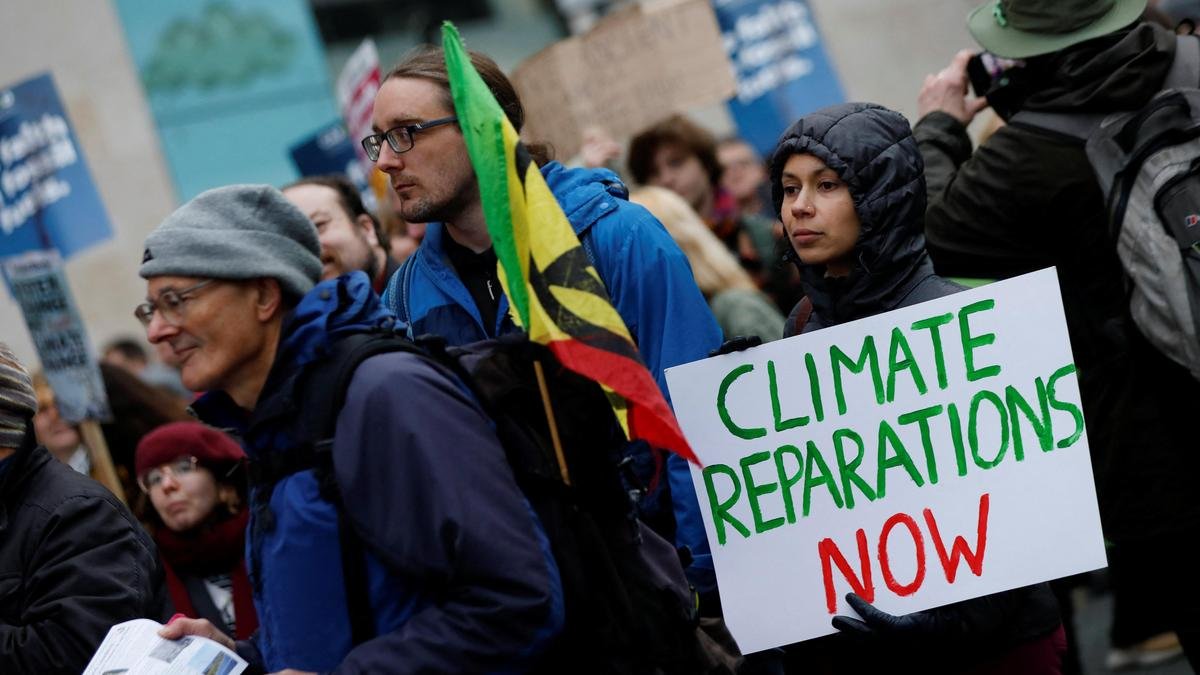

The UNFCCC COP30 summit in Belém, Brazil ended with a deep sense of disillusionment across the Global South. The Mutirão political decision, framed as the heart of COP30’s “implementation agenda,” ultimately delivered a familiar pattern of diluted ambition: lofty rhetoric from developed countries but limited binding commitments, vague pathways without timelines, and symbolic frameworks without adequate financial substance. Even UN Secretary-General António Guterres conceded that COP30 “has not delivered everything that is needed,” stressing that the gap between decisions and scientific urgency remains “dangerously wide.”
The crisis of trust underpinning this disappointment is rooted in a decade of unmet promises. Developed countries’ flagship pledge (mobilising $100 billion in climate finance annually by 2020) was delivered only in 2022, two years late, undermining confidence in subsequent commitments. Against this backdrop, the new finance goal established at COP29 in Baku, i.e., the New Collective Quantified Goal (NCQG) of $300 billion per year by 2035, was already seen as modest, especially when developing countries had formally called for at least $1.3 trillion annually in the 2030s. This figure aligns with broader assessments. Global climate investment needs are estimated at $7.4 trillion per year by 2030, with $2-3 trillion annually required in developing countries alone for mitigation, adaptation, and associated financing costs.
Yet COP30 offered only a voluntary “Baku-to-Belém Roadmap” that envisages exploring mobilisation of $1.3 trillion by 2035, with no interim milestones or mandatory pathways. This means, first, that climate finance flows are likely to remain close to the historical average, roughly $100-115 billion, through most of this decade. Second, that the NCQG remains vastly disconnected from scientific benchmarks. Further, Article 9.1 of the Paris Agreement, which explicitly obligates developed countries to provide financial resources, is increasingly treated as aspirational rather than binding.
Adaptation finance
Disconnect between urgency and outcome is even more evident in adaptation finance. Developing nations approached COP30 united behind the demand for a substantial increase in adaptation funding by 2025 or 2030, citing mounting evidence of a widening adaptation gap. UNEP estimates that adaptation costs for developing countries could reach $215-387 billion annually by 2030, rising to $315-565 billion by 2050, with a mid-point estimate of $350 billion by 2035. Yet adaptation finance today stands at roughly $40 billion, representing less than one-fifth of even the lower-bound requirement.
In this context, COP30’s political decision to “triple adaptation finance by 2035” fell flat. The pledge provides no baseline year, no agreed definition of what constitutes “adaptation finance,” no enforcement mechanism, and no interim benchmarks, making monitoring effectively impossible. This means, first, that the promise is structurally unverifiable; and second, that developed countries have avoided accountability for the Glasgow COP26 mandate to double adaptation finance by 2025, which has already been missed.
The quality of finance compounds the problem. While adaptation requires grant-based support for resilience, over 60 per cent of climate finance to developing countries currently takes the form of loans, increasing debt burdens. One could argue that asking heavily indebted countries (several of which now spend more on debt servicing than on health or education) to “climate-proof” their economies through loans is fundamentally unjust. It shifts responsibility downward precisely when historical emitters should be stepping up.
Loss and damage finance
The picture is equally troubling for loss and damage finance. COP30 was the first full COP after operationalising the Loss and Damage Fund (LDF). On the institutional side, there was some progress. The Belém decision operationalised the Fund in “start-up mode” with a $250 million Barbados-IMF-World Bank (BIM) modality, and strengthened governance through a review of the Warsaw International Mechanism and enhanced coordination via the Santiago Network. But the key issue, actual money, remains unresolved. As of COP30’s close, total pledges to the LDF amount to $788.8 million, of which only $583 million has been legally deposited. The Fund currently holds approximately $407 million.
More concerning is that COP30 secured no new large-scale pledges from developed countries, no replenishment cycle, no interim targets, and no obligation to scale the Fund towards scientific need. This means, first, that the LDF could effectively run dry by 2027 once early projects draw down the modest start-up capital. Second, that the Fund risks becoming another “architecture without resources.” Efforts by developing countries to include language urging increased contributions were reportedly blocked by at least one major developed-country group, reinforcing perceptions that COP30 entrenched procedural progress without substantive finance.
Not surprisingly, developing-country reactions reflected frustration, disappointment, and a growing sense of structural inequity. The G77, African Group, LMDC, and AOSIS had entered Belém calling for a “finance-first” COP that would deliver predictable, accessible, grant-based support. Instead, many negotiators argued that the trust deficit had worsened.
With hindsight, COP30 will likely be remembered across the Global South as a missed opportunity to shift climate finance from rhetoric to reality. Procedural achievements, operationalising the LDF, articulating a new just transition framework, and acknowledging that trillions will be needed, cannot substitute for actual financial flows. The Belém package revealed two uncomfortable truths. First, that the most urgent finance decisions were deferred to the next negotiating cycle. Second, that climate impacts will continue accelerating regardless of diplomatic timelines. Rebuilding trust now requires action in 2025. Developed countries must, first, meet existing pledges immediately, including Glasgow’s adaptation target and LDF contributions. They should also commit to dramatically scaling up predictable, grant-based finance for adaptation, loss and damage, and clean development. Otherwise, COPs will continue as high-profile negotiations with low-impact outcomes.
Sinha writes on macroeconomic and geopolitical issues
Published on November 24, 2025