[ad_1]


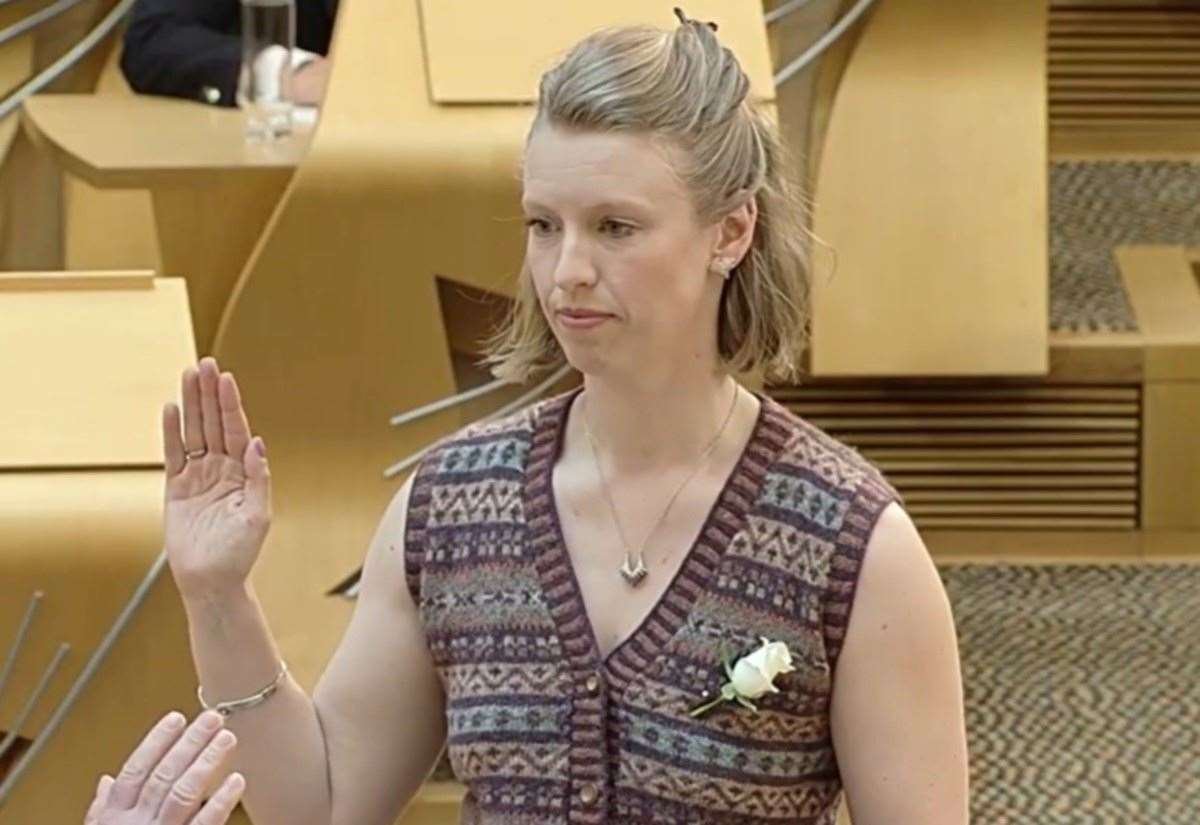
Councillors are hoping the Shetland MSP’s new “seat at the table” as a public finance minister may be the solution to their funding troubles.
A special meeting of Shetland Islands Councul yesterday (Thursday) saw a lively debate on finance including the ongoing reliance on reserves – and how to balance the books.
The discussion centred on the latest “best value report” in which the Accounts Commission noted improvements made by the council in addressing its financial shortfall.
However, auditors continued to highlight the council’s continued reliance on reserves and its lack of pace in transforming services.
The latest financial forecasts indicate a cumulative budget gap of £134.3 million by 2029/30.
Members sought to blame their challenging financial outlook on the UK and Scottish governments – and some suggested Shetland MSP Hannah Mary Goodlad’s appointment as public finance minister might help address that.
Lerwick South councillor John Fraser said: “Let’s see what a seat at the table actually means.
“The proof of the pudding is in the eating.”
Mr Fraser had noted a “year on year drop” in the finance proivided by the Scottish government to deliver council services.
He said if the Scottish government’s grant had stayed in line with inflation in recent years, the SIC would be within £10 million of that “magic number” of achieving sustainable draw on reserves.
“And that’s down to the Scottish government failure to recognise the value and significantly fund local government.,” he said,
“How do we engage with the Scottish government? I think the first start would be to go to the minister for public finance – you couldn’t make it up.”
But Shetland Central councillor Ian Scott shifted the blame- saying the Scottish government’s “hands are completely tied” after years of Westminster governments “starving the public sector.”
Mr Scott went on to say that Shetland “voted for the Lib Dems to carry out the austerity programme – so … we’ve gotten what we voted for.”
“The only councils that they say are doing well are the councils that are doing exactly what they are told by them and that means cutting services – and that is what we are doing.
“We had about 600 full-time equivalent posts lost about 12 years ago, and we were told by our finance officers in 2010 that by 2013 we wouldn’t need to draw on any of our reserves at all.
“The only function of financial forecasting is to make astrologers look good.”
Mr Scott also challenged the views held by councillors on reserve spending, calling for a more “progressive” approach.
The SIC holds more thabn £400 million in reserves, but has faced repeated criticism from auditors over its “unsustainable draw”.
“I don’t understand why we’re not more progressive, more outward looking,” said Mr Scott.
“‘We really should take a completely different view of it.
“We talk about this huge amount of money that’s going to get spent on tunnels – pie in the sky, there is no money.”
The led to Lerwick North and Bressay councillor Stephen Leask referring to Mr Scott as the “prognosticator of doom”.
Shetland Central member Davie Sandison said the problem was that everything was costing more.
He called for prioritisation in efforts to address overspending, stating that “we’ve got far too many priorities in this council”.
Shetland South member Alex Armitage said the SIC reserves “belong to the people of Shetland,” and the pressure to draw from them equated to “an act of theft” by the Scottish government.
Shetland North councillor Andrea Manson referenced new deputy first minister Jenny Gilruth’s appearance on national radio to discuss major reforms for public services.
“I rather suspect we will be treated the same as if we were a small local authority in the Central Belt as opposed to being an island, which is completely different from what the powers in Edinburgh are used to,” she said.
Do you want to respond to this article? If so, click here to submit your thoughts and they may be published in print.
[ad_2]
Source link