[ad_1]
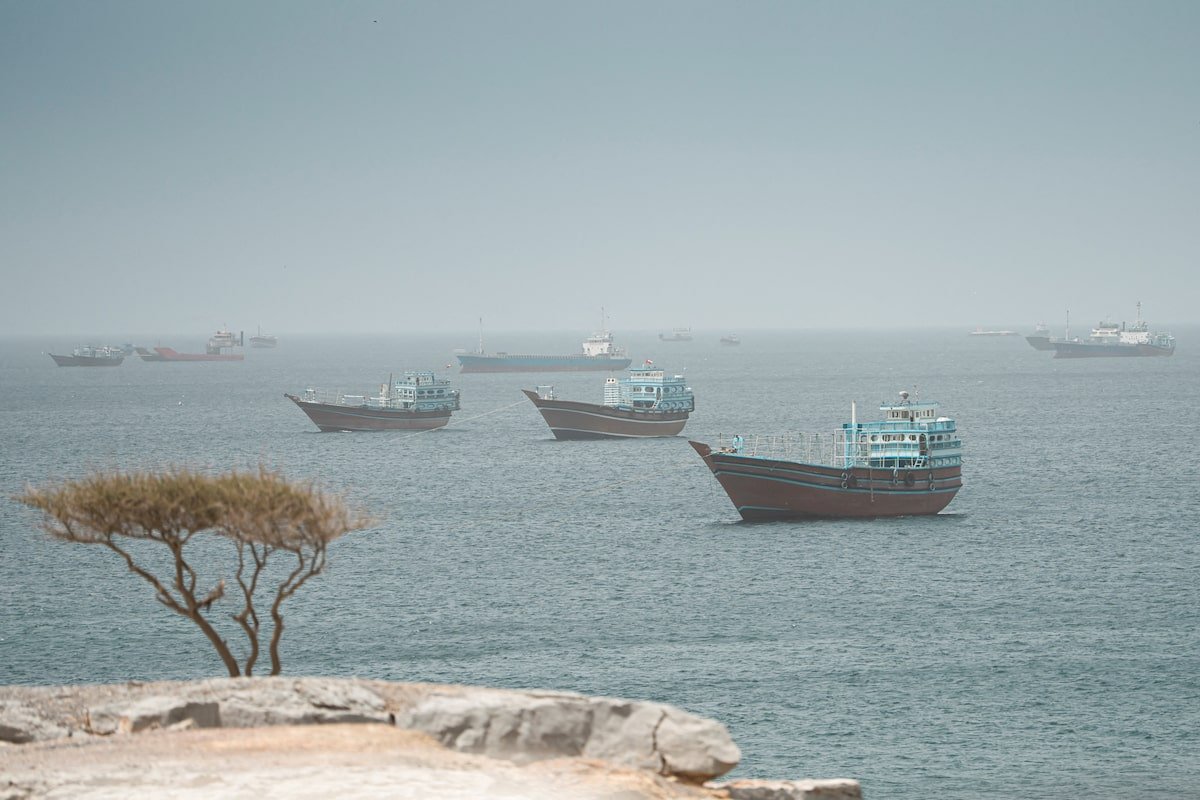
Vessels sail through the Strait of Hormuz near Musandam, Oman on Wednesday. Many investors seek clarity before investing, but such fears are excessive, writes Ken Fisher.Stringer/Reuters
Since my March column addressing Iran war fears and more, we’ve seen myriad developments spurring new worries. Fragile peace talks fracturing. Inflation spiking. Energy prices soaring. Many investors avoid stocks, seeking clarity before investing. Such fears are excessive. Here is the proof.
Crazy as it sounds, little has actually changed since March. Yes, America and Iran “double blockaded” the Strait of Hormuz, and then Tehran “opened” it to “friendly” traffic. But the U.S. blockade affects only Iranian shipments – which are already sanctioned – in and out, and Iran’s oil is mostly China-bound. China stocked up and has ample energy alternatives. At least 19 non-Iranian tankers have entered and exited the strait. Expect more.
Beyond this, strait workarounds keep growing. Saudi Arabia’s east-west pipeline exports were under 800,000 barrels a day (b/d) before the war. Now? More than five million! Oil exports from Abu Dhabi’s Fujairah Port, located in the Gulf of Oman past the blocked Hormuz Strait, jumped almost 40 per cent in March to 1.6 million b/d.
That doesn’t fully offset the strait’s closing. But help keeps coming. U.S. crude exports hit April records and Canadian April output rose 140,000 b/d. Venezuela is pumping more. Countries reliant on damaged Qatari facilities – such as South Korea and Italy – are buying more U.S., Canadian and Australian liquefied natural gas. Asian nations are refiring coal power plants. Any shortages will be short-lived.
Oil prices slump after Trump says U.S.-Iran negotiations in ‘final stages’
Even jet fuel shortages! Yes, Air Canada, WestJet and others nixed some routes and boosted prices, citing fuel shortages. But worst-case scenarios of mass cancellations and soaring airfares assume the strait won’t open – and hinge on scenarios of no new supply sources elsewhere. Doubtful! China is resuming exports. European airlines have ample Norwegian, U.S. and West African supply. The EU’s smartly allowing the use of American kerosene quashes fears further.
Tehran’s tolls? Some see Iran charging US$1 a barrel for Hormuz passage – roughly US$2-million a tanker. Sounds scary! But the Gulf’s marginal oil production costs are around US$20 a barrel. Another dollar won’t bite – if they charge it.
If Iran successfully implemented a pay-for-passage plan, and if it somehow jolts prices, that won’t be permanent. Higher prices would spur even more production globally. Soon, that added supply would lower prices. Economics 101. It works.
That undercuts inflation phobia. While inflation headlines herald U.S. and Canadian energy-driven upticks as just the beginning, this doesn’t foretell 2022-style pain. Nobel economics laureate Milton Friedman proved decades ago inflation is always and everywhere a monetary phenomenon – caused by excess money creation. Canadian M2++ money supply is growing at 5.9 per cent year-over-year. U.S. M4’s 5.8-per-cent year-over-year growth mirrors that. Both are moderate and far below the COVID-19 era’s respective 14.3 per cent and 30.4 per cent peaks, which fed subsequent white-hot inflation.
Investors bet on stability after Trump-Xi summit as Iran war concerns linger
Absent far bigger money supply growth, higher energy prices simply spur substitution. More spent on fuel, less on high-priced, fancy coffee, clothes or dinners out mostly hits luxury goods. It isn’t fun, but doesn’t change inflation or GDP, either – it just rearranges the pieces of both. And only slightly: Energy prices are about 6 per cent of Canada and the United States’ respective Consumer Price Index baskets.
Some see other pass-throughs – such as surging prices of petrochemical feedstocks used to create plastics and fertilizers – lifting prices for all sorts of goods. But that isn’t happening. Excluding energy and food, U.S. goods prices increased 1.1 per cent year-over-year in April – a downtick from March’s 1.2 per cent and in line with January and February’s readings. Those trends echo globally.
Still, some suggest waiting to own stocks until calmer times come. Dumb idea! Markets never wait for clarity. Consider 2022. The TSX bottomed in July and the S&P 500 that October. The Ukraine war continued raging. U.S. and Canadian inflation hit 9.1 per cent and 8.1 per cent year-over-year, respectively, that June, and stayed hot into 2023. The U.S. Federal Reserve, Bank of Canada and other central banks were raising rates. Gloom reigned. But stocks prepriced a better future when few fathomed it.
Same with the pandemic-era bear market. The TSX and S&P 500 both bottomed on March 23, 2020. Know anyone who was excited about economic prospects then? Widespread COVID lockdowns and health fears dominated headlines. But again, stocks prepriced better days many months before fears subsided. Same for 2025’s tariff shock!
It is happening again. The TSX sits just below all-time highs. The MSCI World is 4 per cent above its pre-Iran-war levels. This is how rebounds look: Stocks rise before emotions calm. Fear costs clarity-seekers big-time.
That said, expect more gyrations. But markets won’t stress day-by-day developments for long. Like stocks, you must lift your gaze and look further out. Active investing isn’t reactive. Don’t let short-term worries impair your long-term focus.
Ken Fisher is the founder, executive chair and co-chief investment officer of Fisher Investments.
[ad_2]
Source link