
[ad_1]
In this contributed blog, Amandine Tetot, head of energy and project finance at Triodos Bank UK, explores how the right investment can drive the energy transition, outlining where financing priorities should be.
Last week, governments, civil society, businesses and campaigners gathered in Santa Marta, Colombia for the first ever international Conference on Transitioning Away from Fossil Fuels. With it has come pledges to deliver a new wave of fossil fuel transition roadmaps from 57 countries, marking a shift away from ambition-setting to realising the detail of building clean energy systems.
This promise of practical action is much needed, and long overdue. In many ways, the transition is well underway: cleaner, renewable energy technologies are rapidly scaling up and, in many regions, have become the cheapest sources of new electricity generation.
Yet global energy systems are still dominated by fossil fuels. Billions of people suffer from the health effects of energy-related pollution and continue to face energy poverty, volatile prices or unreliable supply. As climate impacts intensify, from record heatwaves to grid failures, the weaknesses of our current energy system become ever more pressing.
The role that finance can – and must – play to accelerate the transition
In November 2024, the Independent High-Level Expert Group on Climate Finance estimated that the global energy transition will require US$6.3 trillion (£4.63 trillion) per year by 2030, covering not only the production of renewable energy, but also in the wider energy system – including enabling technologies, new business models, market designs and system operations.
We are far from achieving this. Large flows of public and private finance continue to support fossil fuels, locking in emissions and delaying change.
This is partly due to the continued support from public finance, with the vast majority of government investment in global energy assets going to the fossil fuel sector. In addition, fossil fuel subsidies (such as tax exemptions and price controls) continue to lower the effective cost of fossil fuel energy, reinforcing its competitiveness relative to renewables and slowing the reallocation of capital towards clean energy.
However, public money isn’t the only force keeping fossil fuels afloat; commercial finance also plays a major role. In 2024, the world’s largest banks increased their fossil finance by US$162 billion – money that could have instead been used to fund the energy transitions of entire countries.
This short-term, harmful approach to energy financing must end. Instead, we need the global financial system to redirect flows of capital towards making the energy transition predictable, affordable and socially just.
Finance is not a neutral enabler. It has a decisive role in shaping the transition — both by actively financing solutions and by withdrawing support from activities that are incompatible with a real net-zero and equitable future. This includes making deliberate choices about what not to finance, even where market signals remain favourable.
Interconnected actions to drive the transition forward
A sustainable energy future is not simply about replacing one set of assets with another, it requires reshaping how energy is produced, consumed and valued — moving from a system driven by extraction and growth to one built on resilience, sufficiency and long-term societal benefit. It rests on four interconnected actions: clean supply, reliable supply, demand reduction, as well as fair and inclusive access. Together, these principles define what the energy transition needs to achieve, and how it can do so in a way that serves both people and planet.
Each step addresses a distinct part of the energy system, but also reinforces the others – and all four depend on financing. Therefore, it is across all of these pillars that financiers and investors must channel funding.
1) Clean supply
The foundation of the energy transition lies in investing in clean energy supply, focusing on scaling renewable energy generation. However, to be truly ‘clean’, we must ensure that any negative environmental or social impacts are minimised.
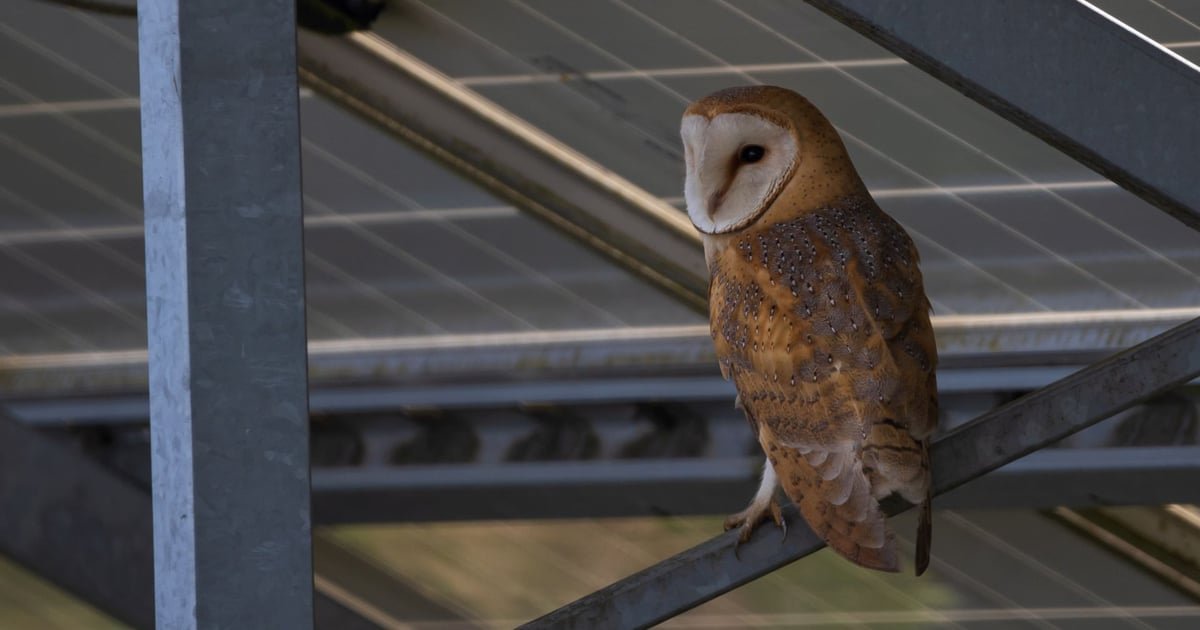
Firstly, scaling renewables should go hand in hand with protecting biodiversity, with smarter spatial planning that integrates energy and ecology – such as funding agrivoltaics that combines solar production with sustainable agriculture, or offshore wind farms which reduce land-use pressures.
Financing clean supply must also address human rights and labour standards. Banks can strive to promote high social and environmental standards by engaging with clients, supporting certification and traceability initiatives, and prioritising technologies and suppliers that meet rigorous criteria wherever possible – thereby working consistently toward greater transparency and accountability.
2) Reliability
Energy supply needs to be dependable, and for this we need targeted investment in innovation to build a resilient, robust energy infrastructure. We also need sufficient transmission and distribution capacity to unlock new renewable energy projects that have been stalled while waiting for grid connection.
To effectively meet the challenge of delivering and balancing electricity supply, the financial sector must focus on grid capacity, flexibility and resilience as critical investment priorities. While large national grids are primarily a government responsibility, banks can have a role to play in this; for example, Triodos Bank focuses on local networks often paired with solar, wind and battery storage, highlighting the important role private financiers can play in supporting interconnected regional systems.
3) Reducing demand
The energy transition is gaining momentum, but our economic system focused on profit and GDP growth remains a barrier, and energy efficiency gains are often outweighed by overall increases in consumption.
The financial sector can play a far more structural role in reducing energy demand — not only by supporting efficiency, but by reshaping how energy is used. This includes working to deliver innovative financial mechanisms that improve the take-up of energy-saving innovations, such as financing deep building retrofits that materially reduce consumption, supporting business models based on shared use and circularity, enabling heat networks that reduce overall demand, and incentivising consumption patterns aligned with sufficiency.
4) Fair and inclusive access
To truly succeed in delivering a just, sustainable future, the energy transition must be clean, reliable and accessible to all.
The financial sector can help embed fairness across the system and drive this forward from enabling new ownership models such as community energy and local co‑operatives, to financing solutions that improve affordability for vulnerable households, supporting decentralised energy access in underserved regions, and promoting responsible and transparent supply chains for the materials underpinning the transition.
Wider systemic change
The energy transition cannot be achieved through technology or finance alone; it requires systemic change. True progress requires shifting the rules that govern markets and institutions.
It’s because of this that we need more financial institutions to make firm, binding commitments to support the transition. Triodos was the first bank to join the global campaign for a Fossil Fuel Non-Proliferation Treaty, aimed at ending the expansion and accelerating the phase-out of coal, oil and gas. Alongside a broad coalition of scientists, cities, Indigenous groups and businesses we have been calling on governments to commit to declaring a firm ‘no’ to fossil fuels once and for all.
To achieve the energy transition, we must bring in regulation that sets enforceable rules, such as legal bans on financing new fossil fuel projects and mandatory climate and nature transition plans for companies.
Through these combined efforts – of financiers, governments, policymakers and businesses – we have the capital, means and roadmap to drive forward the energy transition. The question is how quickly others will join us to act.
[ad_2]
Source link