[ad_1]
When a new technology captures the market’s imagination, investors tend to respond in two ways. They rush to identify the winners and just as quickly write off the losers.
We are seeing that pattern again with artificial intelligence.

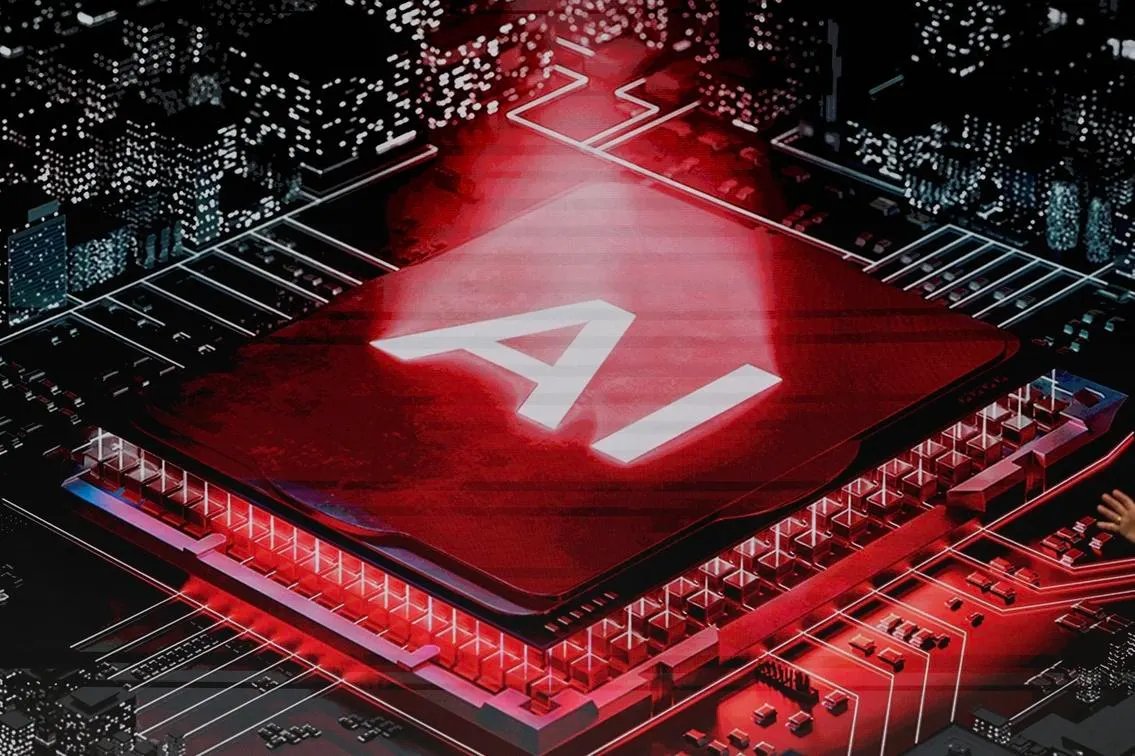
A screen displays an artificial intelligence (AI) processor during Keynote 1 at the MWC (Mobile World Congress), the world’s biggest mobile fair, in Barcelona (Photo by LLUIS GENE / AFP) (Photo by LLUIS GENE/AFP via Getty Images)
AFP via Getty Images
AI will continue to change the economy in important ways. That much is obvious. It will help companies operate more efficiently, speed up a wide range of tasks and expand output without a matching increase in headcount.
What matters more for investors, though, is that those gains will not be distributed evenly. In some parts of the market, AI will strengthen incumbents. In others, it will pressure business models built around speed, convenience or routine execution.
Investors, however, should be careful not to confuse pressure with extinction. Technology can compress margins and force companies to adapt without making them obsolete. Even when an industry changes dramatically, that does not mean it disappears. History offers plenty of examples.
For years, many assumed Amazon would wipe out traditional retail. That happened in some categories, though far from all of them.
Off-price retailers such as T.J. Maxx, Ross Stores and Burlington Stores have held up remarkably well. In fact, over the past year TJ Maxx and Burlington have gained more than 30% while T.J. Maxx has jumped about 65%.
That performance reflects something straightforward yet easy to overlook. Many shoppers still want to go to a store, hunt for deals and leave with their purchases in hand. E-commerce changed retail in lasting ways, but it did not eliminate every physical business that once looked vulnerable.
We saw something similar in fixed income. For years, many believed automation would hollow out sales and trading desks at Wall Street banks and make human judgment far less important. Instead, the business evolved and is as important as ever.
Trading activity has become more digital, while the broader system around issuance, order collection and distribution has remained essential. In many cases, those businesses did not contract. They grew.
That is why investors should be cautious about writing off companies built around convenience. AI can make processes faster and more efficient, but that does not automatically mean the companies that deliver convenience to customers will disappear.
DoorDash and Instacart are good examples. DoorDash remains the clear leader in U.S. food delivery, with almost a 60% market share and steady growth in its core restaurant business. Instacart leads in online grocery, with more than 2,200 national and regional retail partners and more than 10 million monthly active customers.
Both have also built growing advertising businesses on top of their core platforms. And yet both stocks have come under pressure this year amid a broader pullback across technology. DoorDash is down about 30% while Instacart is off more than 15%.
The market may be right that AI will make it easier for restaurants, grocers and other merchants to reach customers directly, weakening the role of intermediary platforms over time. That risk is real.
But it is also possible that investors are moving too quickly from disruption to extinction. In many categories, scale still matters, distribution still matters and customer habits are slow to change. That gives the companies that already control demand, logistics and merchant relationships a better chance to adapt than the market may be assuming.
None of this means every AI-exposed company is suddenly cheap or misunderstood. Some business models will face real pressure, and some deserve to. But investors should resist the urge to treat disruption as the same thing as extinction. The economy is usually more complicated than that, and that complexity is often where opportunity starts.
[ad_2]
Source link